
2H2026 Market Outlook Summit Highlights: The Market Is Up… But Volatility Isn’t Over

The biggest risk in a volatile market may not be the pullback itself — it may be the decisions investors make because of it. In this Stock Talk episode, Chris Perras and Charles Scavone of Oak Harvest Financial Group break down the major forces shaping the second half of 2026, including corporate earnings, peak earnings growth, interest rates, the U.S. dollar, a new Federal Reserve chairman, AI-related capital spending, and the excitement surrounding SpaceX. They also explain why earnings continue to be one of the most important drivers of long-term market performance, why volatility is a normal part of investing, and why trying to time the market can be especially risky for retirees and those approaching retirement. If you’re wondering whether to stay invested, adjust your allocation, or prepare for more market swings ahead, this conversation offers a practical look at what investors should be watching next.
Transcript:
1H Review + Volatility Setup
Troy
I had to think about it for a second, because “Sometimes it’s hard to be a bull rider.” Oh, I get it. The market stock market being a bull rider. And first I have to say, I mean, you did a pretty good job as far as, what the expectations were heading into this year and then what actually transpired.
So talk a little bit about what you meant in the first half outlook. And this is still on YouTube guys. If you want to go check this out. Our first half outlook sometime later. What did you mean when you said the bull is sometimes harder to ride?
Chris
Thanks, Troy. Yeah. So we sit down. Charles and I have been doing this, you know, for years.
I guess I’m kind of the market historian on the team, so, I start a lot of steady, a lot of cycles there, try to come up with a catchy title for it. And just so happens, 2026, when we looked at all the data, whether it’s second year presidential terms or economic cycles, it looked like it would be a volatile at least first half.
So we came up with the title, some in some years writing being a bull rider was harder. So, you know, we thought earnings were going to be good. The economy be resilient. There were a lot of, pro tax policies coming from, the president and the white House that would help earnings and help the consumer. I thought that was there.
However, there were a lot of things kind of behind the scenes that were little warning signs that volatility in the first half would be higher than normal. Inflation was picking up even before the Iran conflict. We saw that kind of message that, it got worse because of the Iran conflict, but that was kind of the spike of it.
But so, you know, the market dropped. I think it was almost exactly 10% in the first quarter and ended the first quarter down almost exactly 10%. And then we started, I guess, to solve the Iran conflict back at the end of March. And the market, like immediately snapped into earnings mode. We’re going to look at, you know, companies that are growing fast and focusing on fundamentals and pretty much v bottomed and rallied, you know, off the bottom almost 21% in a straight line over two months.
So we weren’t expecting that you know out of the gate. But that’s the kind of move we were thinking about for the first half. You know, looking at the second half of this year, I tried to come up with a catchy title, and I have to say the same thing. It’s it looks the same, you know, the, some years being a bull rider is harder.
And, we’re going to talk about the reasons that are both headwinds and tailwinds. But, you know, I would expect volatility to continue for the remainder of the year. You know, hopefully not as much as it was today. But, you know, I would prepare for volatility in the economy’s okay. But there’s just things out there that are kind of bubbling up.
Source: Bloomberg
Troy
Earnings matter right. Earnings matter. So we have volatility, volatility is normal. And earnings matter. So Charles when Chris put out the first half outlook and we talked about it expected volatility. But at the same time we saw a lot of positive currencies supporting continued market growth. We talked about earnings from corporations. We talked about economic resilience.
And we talked about the expectation that interest rates would come down likely sometime in the first half of the year. So out of those three economic resilience, corporate earnings growth and interest rates, which which they have not come down, we missed that one. Where we are today compared to what we thought at the beginning of the year, which one of those three surprises you the most when we where we sit now?
Charles
Yeah. Great question. Thanks, Troy. It is not just the resilience of corporate earnings or corporate profitability. It’s the fact that you can just continue to grow at a very fast pace. That’s so critical to how we view the world and how we make fundamentally driven, earnings driven investment decisions. IT companies have done a fabulous job of really honing in and taking advantage of the three things that we always talk about that drive corporate profitability, sales margins and return on invested capital.
And we’ve seen a handful of secular growth themes, particularly, you know, within the technology sector, but it’s supported other areas, including utilities, energy, and some of the industrial sectors of the economy that have led to very resilient and improving rates of growth and in sales, corporate profitability has held up astoundingly well. Right. And so a large portion, you hear about productivity gains and what does that mean?
If you think about it on a big macroeconomic standpoint, it’s the amount of GDP you’re able to get per unit of employment that you put into it. How much do you get out of the amount of labor or, effort? You, you know, you put into it a lot of the productivity gains have accrued directly to the corporations that are employing, you know, you know, streamline operations better supply chain management coming out of Covid, use of technology to improve corporate profitability.
And and, man, there’s a lot of opportunities for these guys to reinvest in the best portions of their business. And they’ve just created this flywheel effect that’s led to this very robust, earnings backdrop that is really held everything together. And to take a little bit of a different view, although we’ve had all of these other issues take place, not the least of which is, you know, a war, market’s been very resilient.
Why? Because it always falls back upon earnings, earnings growth.
Troy
And that’s again getting back to the theme. So earnings resilience. Chris, I know you kind of feel the same way. Tell us a little bit about that.
Chris
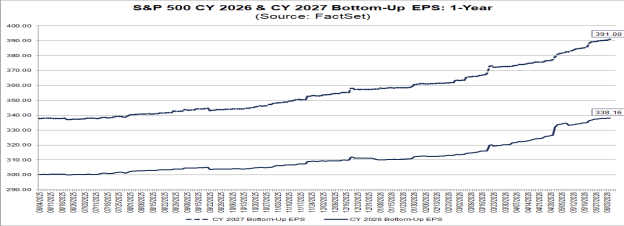
I’m right with Charles. I think unless something strange happens in the next week, the second quarter will be the sixth consecutive quarter of double digit earnings gains, and the S&P 500.
And I think it’s either the second or third over 20%, which outside of coming out of recessions never happened. So, the earnings picture is, has been extraordinary. The strong the first half in 2026, we continue to expect it to be, strong for the year, but particularly in the upcoming a couple of quarters.
Peak Earnings Growth / Rate of Change Risk
Troy
The good news is the same primary driver of the stock market performance over the past, let’s say six months. Just isolate that time frame is still in existence today and is still likely to drive the stock market higher, potentially drive the stock market higher over the coming months.
Charles
Yes, exactly.
Troy
Well so okay, so Chris, now what about a headwind. What what’s something that could counter Charles’s point about earnings growth.
Chris
It’s on the same thing. It would be peak earnings growth so far. Looks like it’ll probably be the third quarter of this year okay.
Troy
So let’s define peak earnings growth.
Chris
And that’s rate of change.
Troy
Okay, let’s define rate of change.
Chris
So yeah in the in the stock market, you know, the stock market rewards, I mean, bad goes to poor, goes to good, goes to better, goes to great, right. It doesn’t reward great goes to good. Yeah. And it just it has a really hard time because then it thinks good goes to mediocre. Mediocre goes it extrapolates linearly. And right now we’re growing earnings not exponentially but at an accelerating rate.
I think fourth quarter was in the high teens. First quarter was 21.5% or something like that. This quarter is supposed to be 21.5%. And then you get to the third quarter. It it’s in the 23.5, 24% year over year rate of change. But then you get on the other side of that and it starts to slow down just because the comps get harder.
You know, it’s just hard to grow earnings in an economy, you know, 20% plus.
Troy
So to Charles’s point, corporate profits are still growing. Yes. But to your point, they’re not growing at the same rate that they were previously.
Chris
That would be in the projection for the third quarter, would be the peak growth rate there for the fourth quarter would be a slowdown in the high teens.
Troy
Yeah. So imagine let’s say you on a private investment and it’s a business that you run. Let’s say it’s a small company that sells widgets and you have 20% growth. This quarter 22% growth. The this it’s take it four quarters ago. You have 20% growth. Then you have 22% growth. Then you have 26% growth. And then this past quarter you had 24% growth.
So that rate of change you went from 26 to 24. Even though you still grew at 24%. The stock market is saying, hey, guess what’s happening here? They went from 20 to 20 2 to 26. Now 24 came back a little bit. The stock market cares about that rate of growth. And that’s what could potentially lead to some volatility in the second half of this year.
New Fed Chairman Risk
Troy
The rate of growth slowing in corporate earnings as a headwind from you, Chris, what’s another headwind that we should be aware of that could cause the market to be quite choppy moving forward?
Chris
Headwind would be, not sure with the new fed chair, you know, what’s he going to do? He he clearly is going to change the messaging, profile relative to Jerome Powell and relative to last probably 20 or 30 years. He’s a disciple, I think, of, Greenspan, who just passed away and, you know, less information, less talking economists on TV, I think is what Warsh is going to go for.
The good news is, at least for us hopefully, is he actually was involved in the financial markets, with tradable financial markets, not as a lawyer doing private equity, for a few years. So I think he the data that he’s going to look at will be more real time and less these, you know, six weeks to eight week old government data that’s revised, you know, ten times and people ooh and all over it and it turns out to be meaningfully wrong.
Troy
So okay so new fed chair. And yeah, there is some uncertainty.
Chris
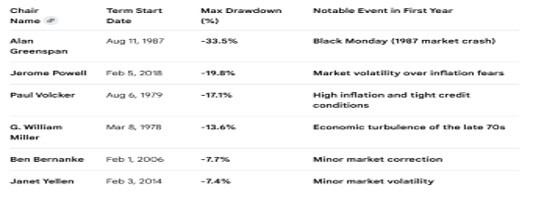
And they’re usually tested in the history of new fed chairs. I think the last seven of them have been tested by the financial markets somehow. Whether it’s an inflation scare, a growth scare, some, shock overseas. I think, you know, they all been tested.
Markets have declined anywhere from seven, you know, double digit rates over 20%. Whether it’s a coincidence or not, expect probably later in the year Warsh to be tested some kind of way. We can guess it.
Charles
If for no other reason, merely the fact that there will be less communications in between meetings means that when the meetings happen, an interest rate policy is made.
There’s going to be more volatility, there’s going to be more variability, the potential outcomes of what happens. And that in itself will create volatility.
Source: ChatGPT
SpaceX/Capital Spending/Investment Discipline
Chris
I think people have gotten so excited about it, they forget that SpaceX is really three companies.
And, you know, two of them, when they were private, were essentially monopolies. Starlink was essentially a monopoly. And SpaceX, you know, was was a monopoly that even Elon said he didn’t think was going to work. Right. And SpaceX has been the rocket company, been in business for 22 years. As to why it’s yeah, it’s an amazing amount of time.
So it’s just been in the last couple of years when he bought Twitter and then he started, he bought grok or a Z I I’m that’s where all the money’s going. And those are not the leading companies in the field. Right. He’s trying to play catch up and spending a lot of money to do it. And as a public shareholder at a $2 trillion valuation, when the valuation I think was 500,000,000,00 6 months ago, it just doesn’t make sense.
Market Timing and Volatility
Troy
Does the rate of earnings growth decelerate, which could cause some type of selloff and volatility because of the various factors that are ongoing and being in, let’s call it a late stage of a bull market, is normal. Is that volatility something that you can withstand?
Should I sell now and get out and wait to come back? And this is where the plan matters right. If you sell now, what you’re ultimately saying is you’re guessing right now and you’re going to be able to guess right a second time on when to get back in.
And we all know that’s unlikely to happen. So the probability of getting both of those right is extremely small. And over long periods of time, you’re most likely costing yourself money. And Charles, I want to let you respond to this one first, but I want to I want to first say this because this is important. Do you know what the difference between gambling and investing is?
So think about it for a second. What’s the difference between gambling and investing? The longer you invest, the more likely you are to win. The longer you gamble, the more likely you are to lose. So volatility is to be expected, but have a proper allocation to equities as part of an overall plan. Know where your income’s coming from.
Make it durable, make it predictable. Make your income growing. And of course, make it liquid. Replicate that paycheck in the retirement phase. The thing that made decisions that were financial in nature much easier when you were working in the accumulation years, replicate that in retirement, and allow the stock market noise to not bother your quality of life. That’s the secret.
And that’s what we do here at Oak Harvest Financial Group. So Charles, when we talk about some of the questions here, we’re going to just put a bunch of them into one. Some of the pre-submitted questions, some of the comments here, you know what what is so difficult about getting out when people feel that the market is volatile or they feel it may go down?
Why, in your experience over many years of of doing what you do, is that unwise? Because the unpredictability of markets.
Charles
Yeah. Well, it tends to be emotionally driven, number one. And it’s not based upon reliable statistical objective indicators, which is what we tend to look at. We can take Chris and I can take a step back and take a very objective look at what’s going on.
But as an individual who sees maybe the value of their account fluctuating a lot, that becomes a very difficult emotional decision for them.
Troy
Or watches the same news program every night. Yeah. And they see the headlines every single night. Or even if it’s different news programs, those are things that are meant to tug on the emotional strings and those things, the same things that make you uncertain about your portfolio are the same things that keep you turning, tuning in to that same show every single evening or every single morning.
Charles
Sure, we I spend a lot of time thinking about the elements of behavioral finance. And we said, and it’s just an incredibly interesting intersection of how people think and how people behave.
And, and, again, it boils down to the, the, the value and the importance of having a human being as a financial advisor as opposed to, you know, some crazy, you know, AI generator or whoever trying to provide investment advice.
You need a person that’s got experience that can help guide you into not making irrational, emotional decisions. Chris and I are just in the back. Chris and I work in the kitchen making the making the best possible, you know, meatloaf, mashed potatoes of green beans, whatever it may be that to to achieve a particular function, figuring out and talking with the client how much of each of those and they’re all different.
All the clients are different. How much of those should be used to create the meal for them. And so we can we can take a step back and view it very, objectively. And I think and then having a person to kind of help guide you through that process and understand what their plan looks like is, is just an incredibly valuable asset.
Chris
I mean, I would just ask for all of you who are contemplating that, do you have a successful career in investing, doing it? Right? Every time you’ve thought about pulling the ripcord and going to cash, you know, did you do it? Did it work out? Did you get back in? You know, what did the market do the next year?
What did you do the next three years? Because I’ve met very few people who ever could get both decisions, right. You know, and most of the people I ever talked to are calling when volatility is super high to make changes and their want to move out, which from a pure data perspective. And right now this is not high volatility.
This is actually normal volatility VIX at 2021, is normal where it is for the last 30 years.
Dollar, Rates, and Normal Correction Statistics
Troy
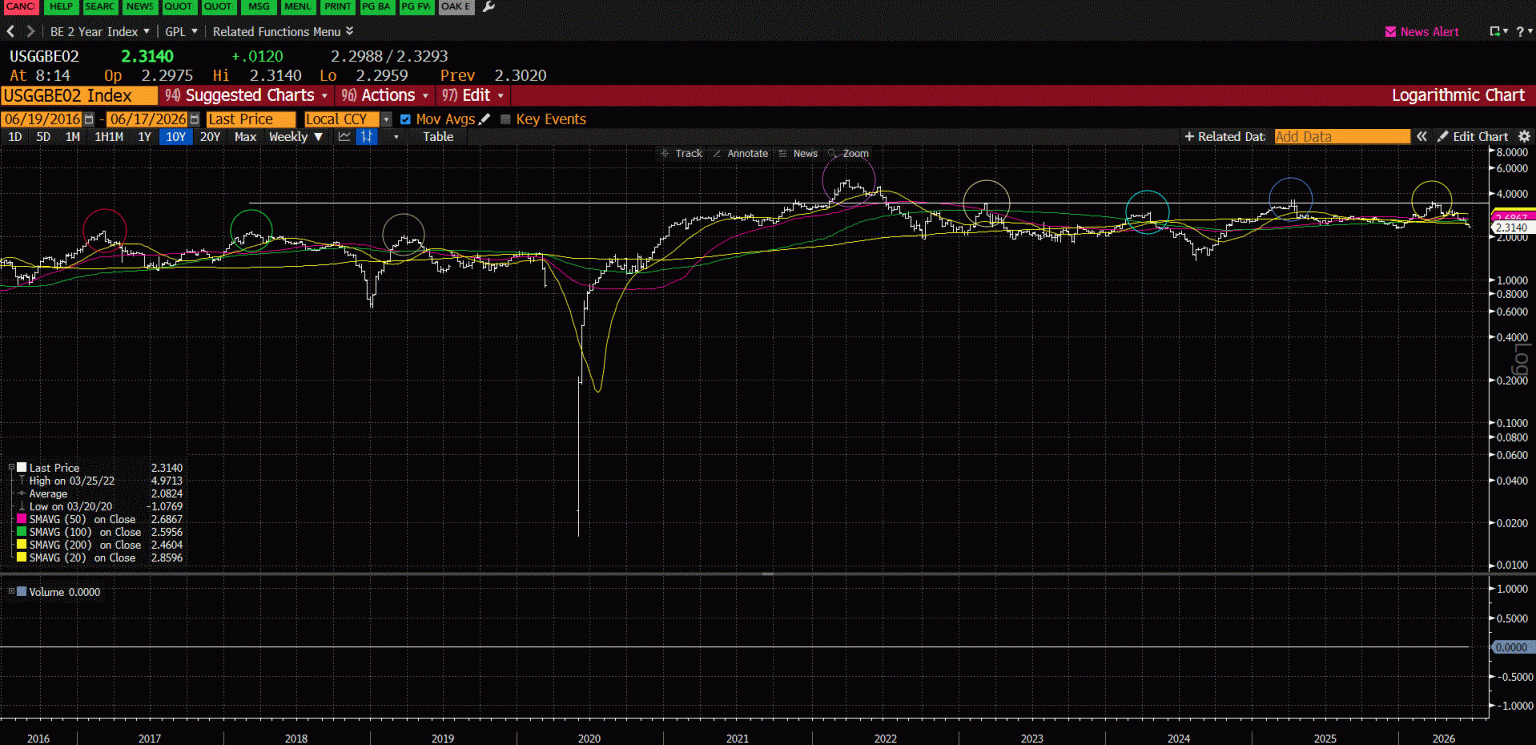
Chris, give you a couple final thoughts. And maybe if one of you guys want to talk a little bit more about the potential for rates to continue to increase, we’re talking about I don’t want to get into real rates, but just the ten year Treasury, but then also an increasing dollar because I think these could be headwinds into the second half of the year. And then talk to us a little bit about the strengthening dollar and what happens if interest rates go higher. Yeah.
Chris
Great points. Those are two headwinds, right. A stronger dollar. From a consumer standpoint is great. But from a financial perspective, the markets don’t generally like it because it’s a headwind to earnings, because so many of our companies sell products overseas. The dollar is going up right now largely because we’re one of the best economies in the world. You know, our ourselves, Taiwan, Korea are growing faster than everyone else. So money comes here. But that’s a headwind to precious metals. It’s a headwind to overall industrial commodities because they, like, lower, dollars.
And as far as interest rates, same thing if interest rates, because either our economy is too hot and people think they’re going to raise rates, which is kind of what people are talking about now, or if it’s back in like the first quarter and inflation was running up, either one if overall nominal rates inched closer to 5% on the ten year, that’s bad for overall stocks because you’re discounting, your valuation now instead of that 21.5, one over 0.05 is now 20.
So you’re just getting multiple compression.
Troy
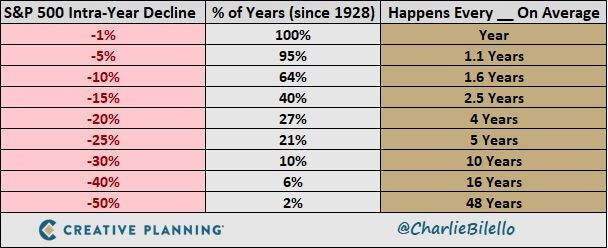
You know, your earnings are if we hit 5% on the ten year, I wouldn’t be shocked if we saw an 810% correction or more. But you have to you have some numbers there Chris. So let’s I want to put this into perspective. So an 8% correction in the market, a 10% correction a 20% correction. These things are fairly normal. So Chris has some numbers. We just want to go through these numbers, give Charles a final word.
Chris
Yeah. These are Creative Planning’s numbers. So and I, I’ve looked into them. They’re great numbers.
So -10% declines in the S&P 500 once every one and a half years okay. -20% once every four years. -30%, which is essentially a recession once every ten years. And the dreaded your money gets cut in half is once every generation, once every 50 years, once every 48 years. Your money gets cut in half. And still the market’s at new all time highs and is compounded over very long periods of time in double digits because earnings and the ingenuity of American companies to grow revenue and grow earnings over time.
Watch the full 2nd Half 2026 Market Outlook Summit Here: https://youtube.com/live/DHdImrS1AX0?feature=share
Do you need a retirement plan that goes beyond allocating funds to truly fit your needs? We can help you create a retirement life plan customized for your retirement vision and legacy. Call us at 877-896-0040 or fill out this form for a free visit: https://click2retire.com/lets-connect
Chris Perras
CFA®, CLU®, ChFC®
Chief Investment Officer, Financial Advisor
Chris is a seasoned investment professional with over 25 years of experience working with some of the most successful money management firms in the world. Chris has made it a point in his career to adapt as the market landscape changes, seeking to utilize the appropriate investment strategy for a given market environment. His transition from managing billions of dollars at the institutional level to helping individuals and families retire is guided by a desire to see first-hand the impact he is making in the lives of clients at Oak Harvest.
Click to subscribe: