

Dot-Com Era (Oct. 1998–Mar. 2000) vs. Today (Apr. 2025–Current): 10 Similarities and Differences
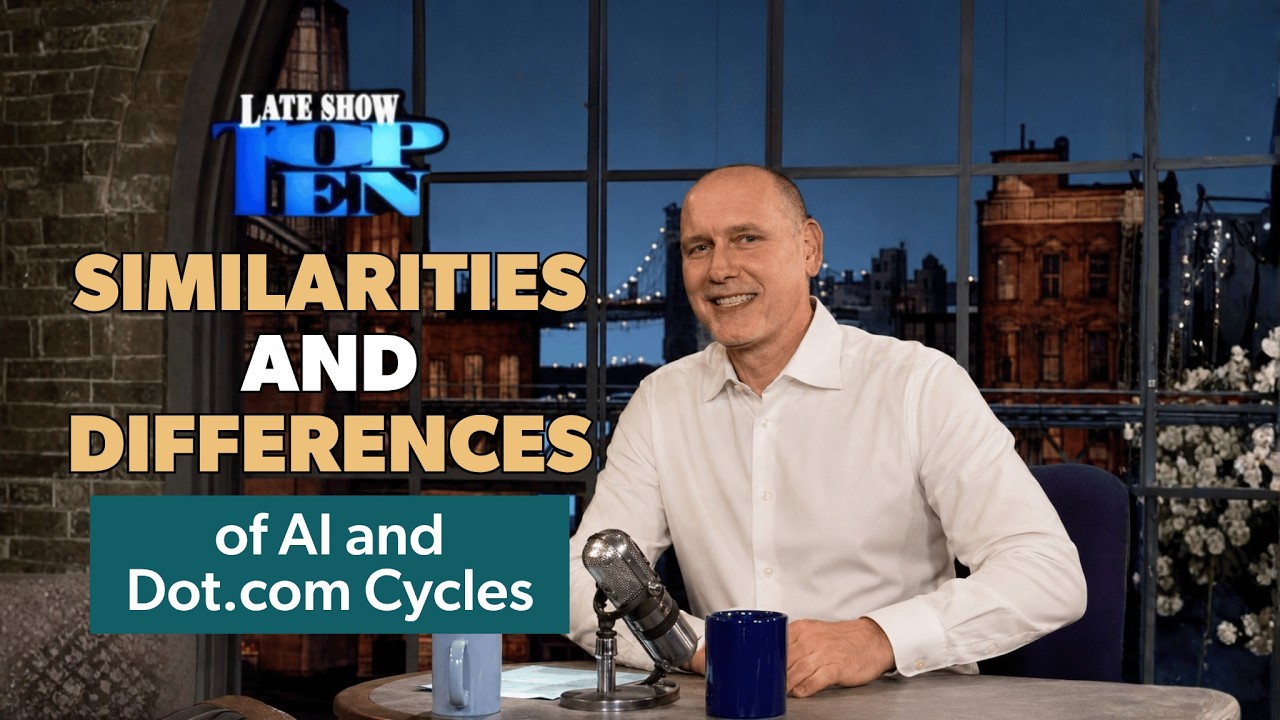
The OHFG investment team has been talking about the AI vs. dot-com cycle for more than a year. We were early in recognizing AI’s capital-spending buildout and the similarities between the two periods, and we saw the comparison as encouraging even while many others worried the market was nearing another bubble peak. At the highest level, both periods were driven by the belief that a major new technology would reshape the economy:
- October 1998 post LTCM-2000: Internet and telecommunications
- April 2025 post Tariff Tantrum-2026: Artificial Intelligence (AI) capex boom
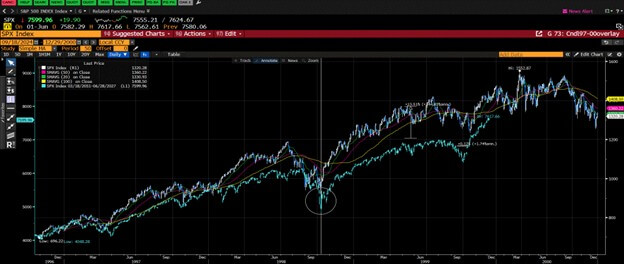
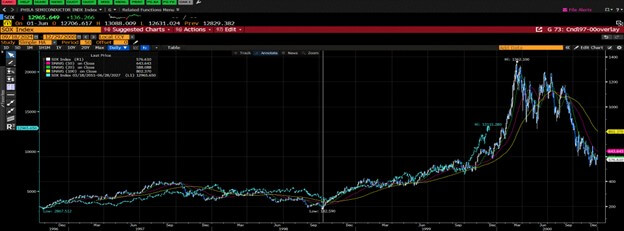
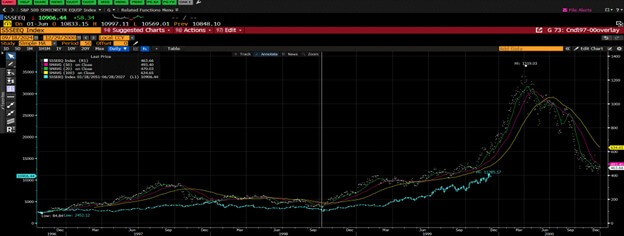
Let’s start off with the 3 charts we’ve shown for over a year. Overlays of the SP500, the SOX semi-index, and the Semi equipment indexes (the most leveraged capex sector I could find dating back to the time period. Our starting points have been October 1998 LTCM blowup and the April 2025 Tariff tantrum selloff. Each were down -21% peak to trough. Maybe it’s the wrong starting point, but so far, its hard not to see the similarities in both its accuracy and precision.
SP500 INDEX
SOX INDEX
SEMI EQUIP INDEX
The biggest difference is that the economy in 1999 was growing faster and operating with lower inflation, while today’s economy faces higher inflation, heavier government debt, and more geopolitical uncertainty. From October 1998 through March 2000, investors poured money into internet stocks. Today, investors are pouring money into artificial intelligence. As someone with 35 years of equity portfolio management experience, let’s compare the two periods. Our team is here to give you 10 similarities and differences to consider.
- Technology Revolutions each period
Similarity
- In both periods, investors believed a new technology could reshape the economy.
- In 1999, that technology was the internet and the wireless data buildout.
- In 2025–26, it is AI and the capital spending tied to data centers and energy infrastructure.
Difference
- Back in 1999, many public internet companies had little or no revenue or earnings.
- Today’s publicly traded AI leaders—you know the names—are highly profitable and throwing off substantial cash flow, albeit no longer Free cash flow.
- S&P 500 stock market Performance – October 1998+ 16 months
Similarity
- The S&P 500 delivered strong gains in both periods. You saw the chart earlier.
- In both cases, a small group of bigger tech stocks did most of the heavy lifting.
Difference
· In 1999, almost all growth stocks participated in the rally, both big and small.
· Today, while small cap technology stocks are working, performance is mainly concentrated in a handful of mega-cap AI companies.
- Nasdaq Composite
Similarity
- In both periods, the Nasdaq performance outpaced the S&P500 by a wide margin.
- Investors were eager to chase fast-growing technology stories in each cycle.
Difference
· The Nasdaq gained nearly 86% in 1999 alone.
· Current gains are strong, but still well below the speculative surge of 1999.
- Semiconductor Stocks (SOX Index)
Similarity
- Semiconductor and optical stocks were market leaders in both periods.
- In both cycles, chips and optics were viewed as the “picks and shovels” behind the technology boom. We’ve shared this comparison for the last 12 months,.
Difference
· In 1999, chip demand came from PCs and telecom equipment.
· Today, demand is being driven by AI data centers and cloud computing.
- Interest Rates
Similarity
- In both periods, the Federal Reserve grew concerned that markets were overheating.
Difference
· In 1999–2000, the Fed was aggressively raising rates after they cut rates in October 1998 to fend of LTCM collapsing,
· Today, the Fed was gradually cutting rates after its inflation-fighting campaign
Key Point
In 2000, the Fed was tapping the brakes. Today, it’s not yet tightening policy.
- Inflation
Similarity
- In neither period was inflation seen as an immediate “crisis”. Key word here is crisis.
Difference
· Inflation was much lower during the dot-com era. And the Fed spent a decade or two after trying to figure out how to get it above 2%. Today, inflation is well over the Fed’s stated 2% goal and its sticky.
Key Point
Today’s investors, and the Fed, still have the inflation shock of 2022–23 fresh in their minds.
- Real GDP Growth
Similarity
- Economic growth remained positive in both periods.
Difference
| · The economy was growing much faster in 1999–2000.
Metric |
Dot-Com | Today |
| Real GDP Growth | ~5-7% | ~2-4% |
| Economic momentum | Very strong | Moderate |
Key Point
Simply put, the U.S. economy was running much hotter during the dot-com boom.
- Oil Prices
Similarity
- Oil and energy prices rose sharply in both periods. Back then due to economic growth. More currently due to growth + geopolitical concerns.
Difference
| · Today’s oil prices are far higher in absolute terms and have yet to rise in % terms the same degree.
Metric |
Dot-Com | Today |
| Oil Price Start | ~$12-$15 | ~$60-$65 |
| Oil Price Peak | ~$30 | ~$100+ |
| Rate of Change | +100% to +150% | +50% to +70% |
Key Point
In both periods, higher oil prices added to inflation worries.
- U.S. Dollar and Geopolitics
Similarity
- The U.S. is the world’s dominant economic and military power in both periods, but China has quickly gained ground the last 20 years.
- Capital flowed into U.S. financial assets in each cycle.
Difference
Dot-Com Era
- Kosovo conflict
- Y2K computer tech concerns
- Relatively stable geopolitics
Today
| · Russia–Ukraine war
· China–Taiwan tensions · Iran War and Middle East conflicts · Trade and tariff disputes Factor |
Dot-Com | Today |
| Geopolitical risk | Moderate | High |
| Dollar role | Dominant | Declining |
| Global uncertainty | Lower | Higher |
Key Point
Today’s geopolitical backdrop is a lot more complicated.
- Culture and Investor Psychology
Similarity
- There was plenty of public excitement in both periods. Back then online trading was a new thing. Anyone over 60 in age can’t forget the wonderful Ameritrade commercial with Stuart egging on his supervisor to buy a few shares of ..wait for it Kmart electronically for $8per trade. To “light this candle”. Today its prediction markets and automated algorithmic trading holding younger investors attention.
- Media coverage was intense in both periods, although media outlets have changed immensely. There was no YouTube, social media or streaming services dominating media back then like they do now.
- FOMO- Investors worried about missing the next big winner.
Difference
- In 1999, enthusiasm centered on SOES day trading and internet stocks.
- Today, it centers on AI, data centers, and automation.
Fun Historical Coincidence
| NBA Finals | Dot-Com Era | Today |
| Matchup | Spurs vs. Knicks (1999) | Spurs vs. Knicks (2026) |
| Spurs Star | Tim Duncan | Victor Wembanyama |
| Knicks Star | Latrell Sprewell / Allan Houston | Jalen Brunson |
Portfolio Manager’s and Investor Conclusion
The Case for Similarity
- A major technology shift is driving capital spending.
- Semiconductor stocks are still leading the way.
- Stock market momentum remains strong.
- Leadership is concentrated in growth stocks.
- Investors are still excited about transformative innovation.
The Case for “It’d different this time”
- Today’s AI leaders are highly profitable businesses with huge cash flow, albeit it now negative FCF.
- Inflation is higher than it was back then.
- GDP growth is slower now than then but our country has tens of trillions more in national debt.
- Geopolitical risk is meaningfully higher now than in the late 90’s.
Final Assessment
Today’s stock market continues to look a lot like “dot-com lite”.
The clearest similarities are the excitement around technology, leadership from semiconductor stocks, and investor psychology. The biggest differences are valuations, the lower starting point for interest rates, Fed policy, inflation, economic growth, and the fact that today’s market leaders generate real earnings and cash flow. For long-term investors, that may be the most important distinction. If today’s market is somewhere along the lines of 1999, our team believes we likely moved past the seventh-inning stretch in April and still have a few strong innings left, supported by solid revenue, margin, and earnings growth at least through the third quarter of 2026.
As a retiree or pre-retiree, we know it can be difficult to stay patient with your portfolio when financial news is designed to stir emotions. Most often, though, the best approach is to stay focused on what matters most to stocks over time: earnings and earnings growth. Right now, that is what the market is watching most closely.
For now, stay disciplined and stay diversified. And focus on what’s real, not just what’s exciting. Whether your priority is growth, income, or a combination of both, the OHFG team is here to help you plan for your family’s financial future, no matter where you are in your career or retirement journey.
Do you need a retirement plan that goes beyond allocating funds to truly fit your needs? We can help you create a retirement life plan customized for your retirement vision and legacy. Call us at 877-896-0040 or fill out this form for a free visit: https://click2retire.com/lets-connect

Chris Perras
CFA®, CLU®, ChFC®
Chief Investment Officer, Financial Advisor
Chris is a seasoned investment professional with over 25 years of experience working with some of the most successful money management firms in the world. Chris has made it a point in his career to adapt as the market landscape changes, seeking to utilize the appropriate investment strategy for a given market environment. His transition from managing billions of dollars at the institutional level to helping individuals and families retire is guided by a desire to see first-hand the impact he is making in the lives of clients at Oak Harvest.
Click to subscribe: