
The Fed is being “Real”ly Aggressive Trying to Catch-up
Fighting Inflation: Stock markets moved sharply higher into mid-August on hope for a shift toward an easier Fed in the 4th quarter and in 2023. Real interest rates were falling into Chairmen Powell’s speech in late August, having peaked on June 15th. The markets had interpreted Powell’s July comments to signal the possibility of a downshift in the pace of rate hikes. Jerome Powell’s 8-minute speech at Jackson Hole on Friday, August 26th threw cold water on that. Since then, virtually every asset market in the world has moved lower on a price basis. Stocks lower, Bond prices lower. Commodity prices? Lower. I am Chris Perras with Oak Harvest Financial in Houston, and welcome to our weekly stock talk podcast, keeping you connected to your money. Before we get into this week’s topic, “The Fed plays catchup, do they want to break something?” Please take a moment to click on the subscribe button and click on the notification bell so you will be alerted when our team uploads our latest content. Over the last three weeks, Jerome Powell and other Fed officials have reiterated that the central bank’s commitment to fight inflation is its top priority. It’s top priority over economic growth. The Fed has already raised rates twice by 75 basis points, and by the time this episode is published, a third consecutive 75 basis point increase will likely have been minted at the Fed’s September 20-21 meeting. While Powell has repeatedly said that “the Fed and its committee is data dependent,” the government data they review continues to show elevated and stubborn inflation. The Fed generally relies on data collected mainly by the bureau of labor and statistics, which has historically lagged behind what’s going on in the real-time economy by months, both on the way up and way down. The release of August CPI data on September 13th exceeded analysts’ expectations and set off a cascade down in stocks and up in Fed rate expectations. Additional Insights: The Dow Jones Industrial Average fell over 1275 points, almost…
September Stock Market Seasonal | Stock Talk Podcast
A Volatile Year… 2022 has been a mess across virtually every asset class globally. Except for a few industries like domestic utilities, and a few energy related commodities like natural gas or lithium, asset class returns have been negative year to date and highly volatile at the same time. Music to the ears of short term traders, but the worst of both worlds to most longer term investors. I’m Chris Perras, Chief Investment Officer with Oak Harvest Financial Group. And This is our investment team’s mid-week release when we examine a news item, headline, or story making the rounds from publicly available sources and ask, “Is it News or Noise?” for your money. This week we talk volatility in the stock markets. Year to date there is almost no asset class I can find that has escaped a year of high volatility and negative returns. A few that have are the dollar currency and domestic utilities, and energy related equities and their commodities. Unfortunately, neither of these categories make up a large portion of the indexes here in the states so every broad index I track here in the states is down year to date. Year to Date Bond returns are negative with? High volatility to boot. Many investors were told that wasn’t the way bonds worked. Well when yields are falling that’s correct. However, year to date, with the Fed raising short term rates so quickly, real yields have risen over 200 basis points in 10 year Treasuries and 425 basis points in 2 year treasuries. And volatility as measured by the bond market Move Index has skyrocket. Since September of 2021. The move index has tripled in a year from 50 to 150. But guess what, there is a bit of good news. It’s beginning to decline off its highs. That’s good for not only fixed income investors but also for all risk assets if continues. Which leads me to more good news few are discussing. That’s the news that behind the scenes, volatility is starting to…
Jackson Hole “Real”ly “Interest”ing | Stock Talk Podcast
In the second half of July, stock markets moved sharply higher into mid-August on the hope for a shift towards an easier Fed in 2023. Real interest rates were falling then, having peaked on June 15. The markets had interpreted Powell’s July comments to signal the possibility of a downshift in the pace of rate hikes. And the S&P500 ran higher into August option expiration near the S&P500 200-day MVA around 4300. Those gains were already reversing into Jerome Powell’s 8-minute speech at Jackson Hole on Friday, August 26. Since then, virtually every asset market in the world has moved lower on a price basis. Stocks lower, Bond prices lower. Commodity prices ex natural gas? Lower. What gives? I am Chris Perras with Oak Harvest Financial in Houston, and welcome to our weekly stock talk podcast, keeping you connected to your money. Before we get into this week’s topic, “Jackson Hole, Jerome Powell makes it Really Interesting,” not in a good way. Please take a moment to click on the subscribe button and click on the notification bell so you will be alerted when our team uploads our latest content. In case you missed it, Jerome Powell did pretty much what everyone who works for him said he would. He reiterated the central bank’s commitment to fighting inflation as its top priority over economic growth. He did this in a very direct and straightforward manner. He referred to the “unfortunate costs of fighting inflation.” Those costs are a pain to the USA economy in the form of further economic slowdown, a weaker consumer, lost jobs, and higher unemployment rates. He brought up former Fed Chairmen Paul Volcker’s name more than once, and he pledged that the central bank will “use our tools forcefully” to attack inflation that is still running near its highest level in more than 40 years. Apparently, more than a few investors and shorter-term traders were hoping Powell would give some signal that given the shorter-term peaking goods inflation, higher interest rates would be a short-term phenomenon….
It’s Still Summer – Where Do We Stand? Is It Time To Buy The Dip? “Time To Light The Candle?”
Ok, I’m getting old. How do I know that? 1. I catch myself watching the weather channel way too much and 2. during certain times in the market, I think back and remember iconic TV commercials from earlier times in my career. One of my all-time favorite commercials was this one released by TD Ameritrade in 1999. It’s a must watch mostly for its horrible timing near the peak of the internet bubble, but also for the generational exchange between a younger technology savvy Stewart and his older business associate. In it, Stewart coaches Mr. B into buying a stock, electronically, online, without a broker, without a phone call, for a fixed commission. What’s Mr. B buy, 100 shares of Kmart. Yes Kmart! Stewart utters the classic line. “let’s light this candle”. Sounds a lot like the Reddit boards nowadays! In uttering those 4 words, “let’s light this candle”, Stewart is referencing a stock charting technique used by traders to determine possible price movement based on past patterns. https://vimeo.com/39711469. Stewart is emotionally cheering Mr. B on trying to get him to run and gun a stock. I am Chris Perras with Oak Harvest Financial in Houston and welcome to our weekly stock talk podcast, keeping you connected to your money. Before we get into this week’s topic, discussing the 3rd quarter, “It’ still summer, where do we stand now? Is it time for FOMO? Time for fear of missing out and, as Stewart said 25 years ago, “time to light this candle”? or is it time to be measured and “buy the dips?” Please take a moment to click on the subscribe button and click on the notification bell so you will be alerted when our team uploads our latest content. No one, including myself can say so with absolute certainty, that yes, the lows are in for the year. That June 14-16 was it. However, we first presented our positive case for this on July 1st, with our video release, “Opportunity knocks early”. The data has been saying that…
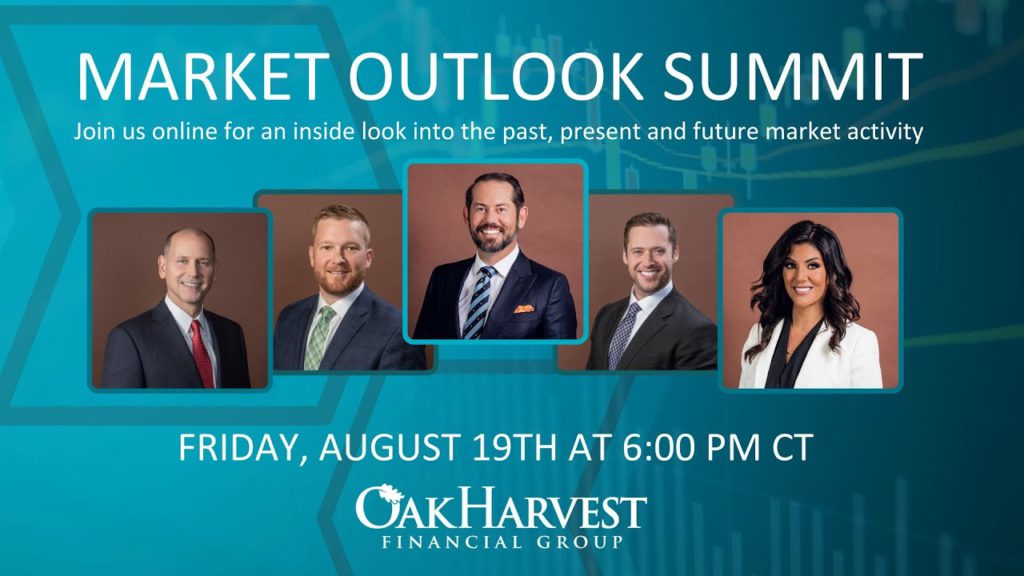
No Stock Talk for This Week: Please Watch our Market Outlook!
This week, we don’t have a Stock Talk Podcast, but instead, ask you to watch our August 19, recorded live Market Outlook Broadcast, as it offers in depth information relevant to your portfolio. – Chris Perras ALL CHARTS ARE SOURCED FROM BLOOMBERG: 18:24, 26:49, 41:45 SummaryTitleNo Stock Talk for This Week: Please Watch our Market Outlook!Description Join us for our Investment Summit for a live panel discussion and Q&A regarding current market volatility and what likely outcomes the market has in store over the next few months. You’ll gain insight from the investment team at Oak Harvest Financial Group designed to help you tune out the noise and focus on what really matters.
2nd Half Outlook Part 2 | Stock Talk Podcast
The first half of 2022 is behind us. It was abysmal in the markets. We suffered the first true correction since the Covid crash in the first quarter of 2020. However, we also extended that downward to the first -20% bear market drawdown in years. But the question is now? What’s in store for the second half of 2022 and the first half of 2023? Are “THE” lows in for 2022? I am Chris Perras with Oak Harvest Financial in Houston, and welcome to our weekly stock talk podcast, keeping you connected to your money. Before we get into this week’s topic, the second part of what does the rest of 2022 look like? “Where do we go from here?” Please take a moment to click on the subscribe button and click on the notification bell so you will be alerted when our team uploads our latest content. Much of this and the next few weeks content will be part of a Friday, August 19th, YouTube live stream our team is doing on our second half market outlook. Take a moment and preregister if interested. Are the stock market lows in for the year? Is this year’s correction and “bear market” decline behind us and in the rear-view mirror for good? Was June 16th the low for the stock markets for 2022? Those are the questions on almost everyone’s mind. And while no one, including myself, can say so with absolute certainty, that yes, the lows are in for the year, we first presented our case for this on July 1st, with our video release, “Opportunity knocks early.” The data has been saying that “yes,” those are the odds that it was “The Bottom.” The correction and bear market of 2022 are likely in the rear-view mirror. While we do think the data indicates June 16th was likely THE low for the year, and while we expect more monthly volatility throughout year-end, it should be much calmer than the first half. We expect the “buy the Dip” institutional crowd to…
2nd Half of 2022 Market Outlook Part 1 – Where Do We Go From Here | Stock Talk Podcast
First things first. We have had a big, big rally in stocks over the last six weeks. We thought this was likely back in late June and early July. We published our thoughts with our July 1st video, “Opportunity Knocks early.” However, from here, the indicators we watch say we should expect a couple of months of waffling before the market decides its true intention, which is potentially upward. Ok, onto this video. Many economists and strategists were early to make comparisons to the 1970s. How early? Some people have been parroting this stuff for over five years. See the writings of hedge fund icon Ray Dalio of Bridgewater. He started this as early as 2017. Has this analogy helped anyone who has been investing for the last five years? No. Well, not until the first half of 2022. I’m part of Generation X. We were born between 1965 and 1980. Our generation vaguely remembers the 1970s. We remember gas lines as children and recall our parents being mad about not getting paid 15% on their CDs anymore. We are part of what I have deemed the “irrelevant generation.” Others are more kind, calling us a transitional generation. There are about 65 million Gen Xers in America. We are wedged between the massive, but now declining Baby Boomer demographic, who is older than us. On the other side is the Millennial and Gen Z Tsunami, whose numbers total almost 140 million combined. This group, under the age of 45 to 50, will take control of America’s economic and political path over the coming decade. It’s just math. It’s a numbers game. As Thanos said in Marvel’s “Infinity Wars,”… “I am inevitable.” Gen Xers grew up as children in the 1970s and mid-1980s. We grew up in a time of shifting societal values. We were dubbed the “MTV Generation” growing up on a new media technology, cable TV. We grew up on ESPN, CNN, and TNT. We were the first generation to grow up on Video games for entertainment and computers…
S&P500 – Are The Lows In? | Stock Talk Podcast
Are the stock market lows in for the year? Or is this another “bear market” rally? Is this year’s correction and “bear market” decline behind us and in the rear-view mirror for good? Was June 16th and 17th the low for the stock markets for 2022? Those are the questions on almost everyone’s mind and the ones we are getting asked at Oak Harvest on the investment side almost daily. And while no one, absolutely no one, including myself or any other strategist, economist, or portfolio manager, can say so with absolute certainty, that yes, the lows are in for the year, we wanted to present some additional data following up on our July 1st podcast title “Opportunity knocks early.” This data has been saying that “yes,” there are good odds that it was. Unless you think we are on the verge of another 2008 Great Financial Crises or 2000 DotCom bubble collapse, the data is aligned in saying the worst may be over. However, I remind you that even if this happens to be the case, and June 16th was THE low for the year, 2022 still does not look like a V-bottom year, and expect a few more months of uncertainty and volatility in the overall markets. I am Chris Perras with Oak Harvest Financial Group in Houston, Texas, and welcome to our weekly stock talk podcast. Before we get into this week’s topic, “did I miss the lows?” Please take a moment to click on the subscribe button and click on the notification bell so you will be alerted when our team uploads our latest content. The economic data has been consistently missing expectations now for months. The Federal Reserve met again last week and raised short-term interest rates by another 75 basis points. And then the next day, the second quarter GDP figure was released with the second consecutive negative quarterly number. In my book, the old school ones, that’s the definition of a recession. And while politicians, economists, and academics might argue the semantics, it’s…
Michael Hartnett is So Bearish, He’s Bullish | Stock Talk Podcast
Michael Hartnett is the Chief Investment Strategist at Merrill Lynch. Amongst all of Merrill’s economists and strategists, he is perhaps the most well followed by institutional and retail investors. It’s a big title, and he’s followed by 100’s of thousands of advisors and millions of investors. He’s been around the block for a few decades and seen a few economic and stock cycles. He predominately uses a data-driven approach. While too conservative in his second-half 2021 outlook, he was one of the first sell-side strategists to correctly call for a first-half 2022 sell-off for what turned out to be the right reason. That reason. Higher inflation and slowing growth. This is also known as “stagflation” in economic circles. Late Monday night last week. Early Tuesday morning, July nineteenth, he released his much-anticipated Global Fund Managers Survey. Its title, in bold headlines, read, “I’m so Bearish. I’m Bullish”. The first sentence of his report read as follows: “The Full Capitulation- July’s Fund Manager Survey shows a dire level of investor pessimism…Expectations for global growth and profits at all-time lows, cash levels highest since the 9/11 terrorist attack, equity allocation lowest since Lehman Brothers collapse, our Bull/bear indicator remaining at “max bearish” levels, Zero, but sentiment says stocks and credit should rally.” And with that headline, and with those words, after grinding higher since June sixteenth, Tuesday at the open, the markets exploded up, in both price, volume, and market breadth as measured by advancing versus declining stocks. I am Chris Perras with Oak Harvest Financial Group here in Houston, Texas, and welcome to our weekly stock talk podcast. Before we get into this week’s topic dissecting Mr. Hartnett’s market call for a rally, which is a follow up to our July first video “Opportunity Knocks early!” And July eighth, follow-on “Opportunity knocks Part 2” videos. Please take a moment to click on the subscribe button and click on the notification bell so you will be alerted when our team uploads our latest content. You’ll find the links of those two videos…
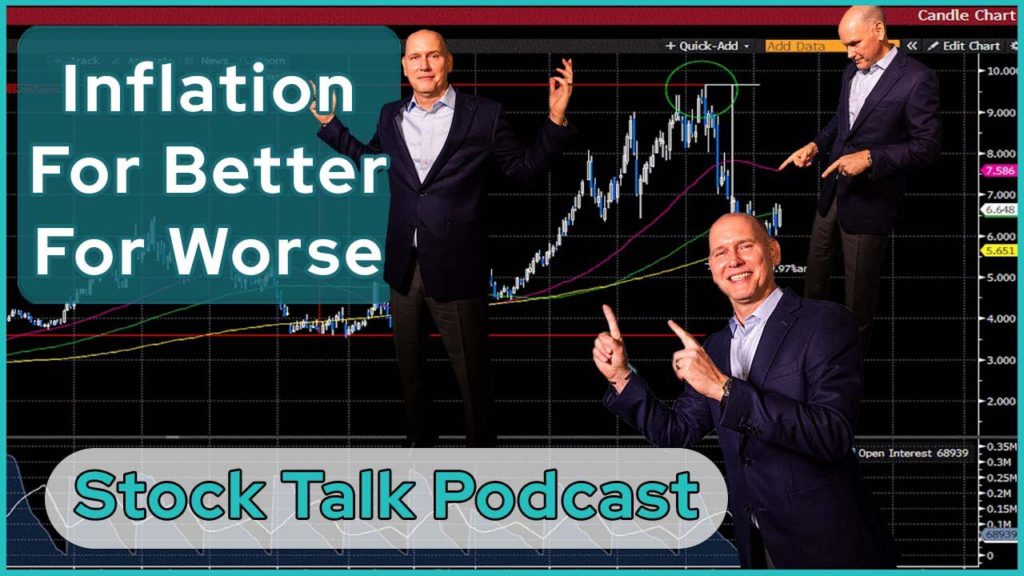
June Inflation – For Better or Worse | Stock Talk Podcast
It’s summer in the markets and while many people are off enjoying a vacation with their spouse, family or friends, many investors, and short-term traders in particular, are focused on the specifics of government data releases, what they mean for future Federal Reserve monetary actions, and what that might mean for the markets the next 6 to 12 months. I’m Chris Perras with Oak Harvest Financial in Houston, Texas, and welcome to our weekly stock talk podcast. Before we get into this week’s topic dissecting “last week’s high print government CPI figure,” Please take a moment to click on the subscribe button and click on the notification bell so you will be alerted when our team uploads our latest content. The government data is in, and the Consumer Price Index jumped 1.3% in June, surpassing consensus calls of 1.1%. This was the largest monthly increase since 2005, and it spiked the yearly rate on the CPI to 9.1%, the highest since 1981. One would think, this, of course, is short-term bad news as it puts more and or larger Federal Reserve interest rate hikes on the table. With that dynamic in hand, this puts the hope for a soft economic landing more unlikely. On this report last Wednesday, pre-open, the S&P 500 futures “pajama traders,” as Jim Cramer calls them, took the S&P500 index down -1.7% and Nasdaq heavy with tech stocks, down -2.5% before the regular trading session opened. By lunch, tech stocks turned green and were up .5% on the day, and the S&P500 recovered back to 3830, up 80 points off its low or about 2%. In 4 hours. These are the moves that happen when future volatility is priced at 28-29.5. 80 to 100 intraday S&P500 points per day. Not fun for anyone except day traders. The SP500 traded in By Friday? The Nasdaq was — and S&P500 was — by week’s end. Look at the table from BMO summarizing the categories of inflation for the month. Things in this report that are negative and slow…