
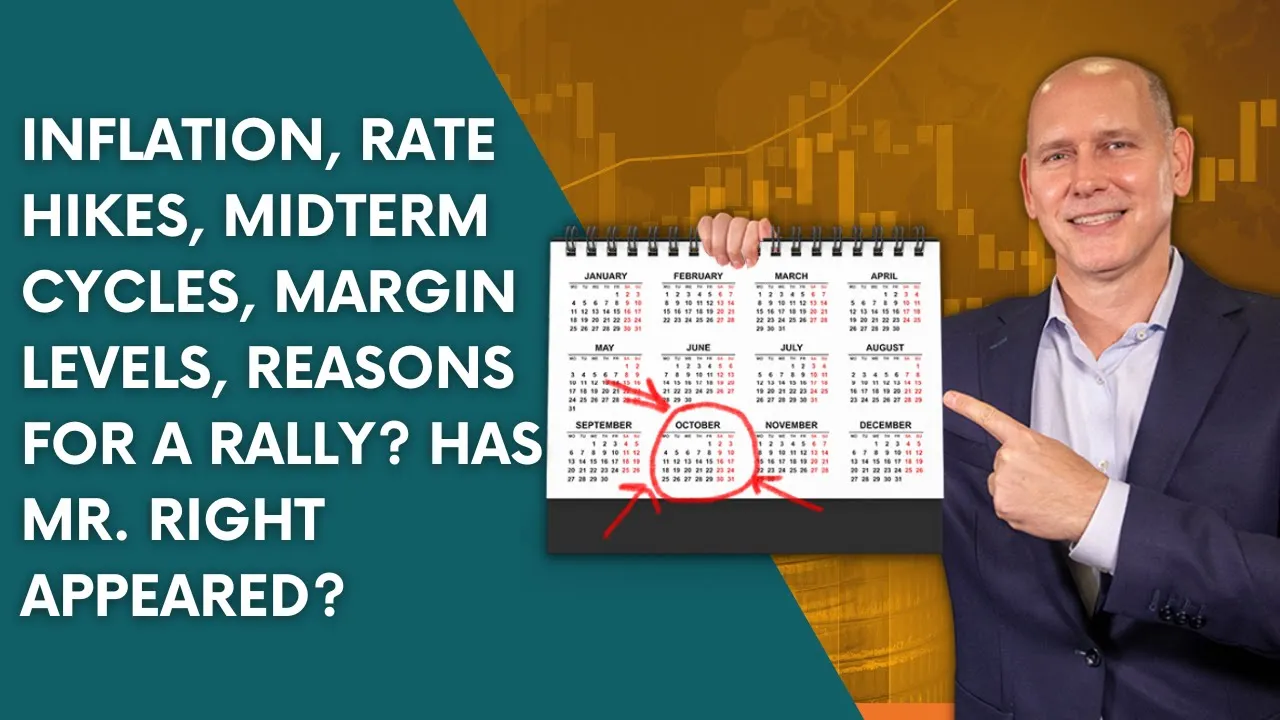
Inflation, Rate Hikes, Midterm Cycles, Margin Levels, Reasons for a Rally? Has Mr. Right Appeared?
What Could Go Right? With the S&P 500 probing its lows for the year, investor anxiety near highs, and sentiment near lows, on Friday, October 14th, the Oak Harvest Investment team released our weekly stock talk podcast and its title? What could go right with your portfolio in the 4th quarter? I am Chris Perras, Chief Investment Officer at Oak Harvest Financial Group, and I want to recap what we were saying six weeks ago and address where we stand currently. Before I get into more detail with this week’s video titled “Mr. Right appeared,” make sure you click on the subscribe button as well as the notification bell, so our team can notify you when we upload new content. Recall that back in October, the Federal Reserve was on the move with historically large and fast interest rate hikes. From the lowest level on record to over 300 basis points in just nine months. Since then, they’ve added another 75 basis points, and they’re expected to add another 50 in just another week at the December meeting. Take a look at the table with their year-to-date moves. Remember that the Fed directly controls short-term interest rates. Ok, I’ll say it. And it’s a much-overused term, but the Fed’s moves in 2022 have been “unprecedented” for the last 50 years. Only Alan Greenspan, in 1994, comes close. Back then, Greenspan doubled rates by 300 basis points in 12 months to slow growth and ensure inflation didn’t perk up. In 2022, the Fed is raising short-term rates with the sole purpose of trying to cool inflation down. Take a look at the chart with 2022 interest rate hikes compared to prior cycles. Back on October 14th, the S&P 500 was down over -25% year to date. While others were saying the Fed would need to pause interest rate increases for a rally in stocks, our team said that’s not what’s historically needed. In fact, we specifically pointed to that same 1994 cycle when Greenspan merely slowed the pace of rate hikes…

Does China Matter for YOUR Retirement Portfolio going into 2023?
Post-China President Xi Jinping’s latest meetings with U.S. President Joe Biden, Chinese equities and those stocks exposed to the Chinese economy have rallied strongly off depressed levels over the last month. Maybe it’s been the notion of China relaxing its Zero-Covid policy? Or maybe it’s been China’s relaxing monetary policies to help cushion their ongoing credit crunch on real estate property developers? I don’t know, but it’s likely to have been a combination of the two after an almost three-year crackdown on economic growth and re-focusing of China inwardly as Xi campaigned for and won his unprecedented third term as party head. I’m Chris Perras, Chief Investment Officer at Oak Harvest Financial Group, and I want to address why China matters to almost every stock and bond investor nowadays, whether you directly invest in Chinese equities, own multinational corporations, or just index your portfolio to the S&P500. Before I do, make sure you click on the subscribe button as well as the notification bell, so our team can notify you when we upload new content. As China’s Zero Covid rules enter its third year, there are new signs of discontent across the country. For China’s leader, the social unrest is a test of his third term and underscores the question of how he can lead China out of the Covid era. The recent displays of defiance are rare for the Chinese and are the most visible signs of frustration with the lockdowns, quarantines, and mass testing that have upended everyday life. Even minor “re-opening” efforts in China have led to rapid increases in Covid cases due to prior policies. It’s safe to say, that one man and one policy cannot control a virus. China’s struggles are of Mr. Xi’s own making. He has stuck with his “zero-Covid” policies aimed at eradicating Covid infections, even as its vaccination efforts have lagged. For three years, Xi pumped out propaganda in support of tough controls, arguing they were the only way to protect lives. They eschewed outside help in vaccine development. They chose…
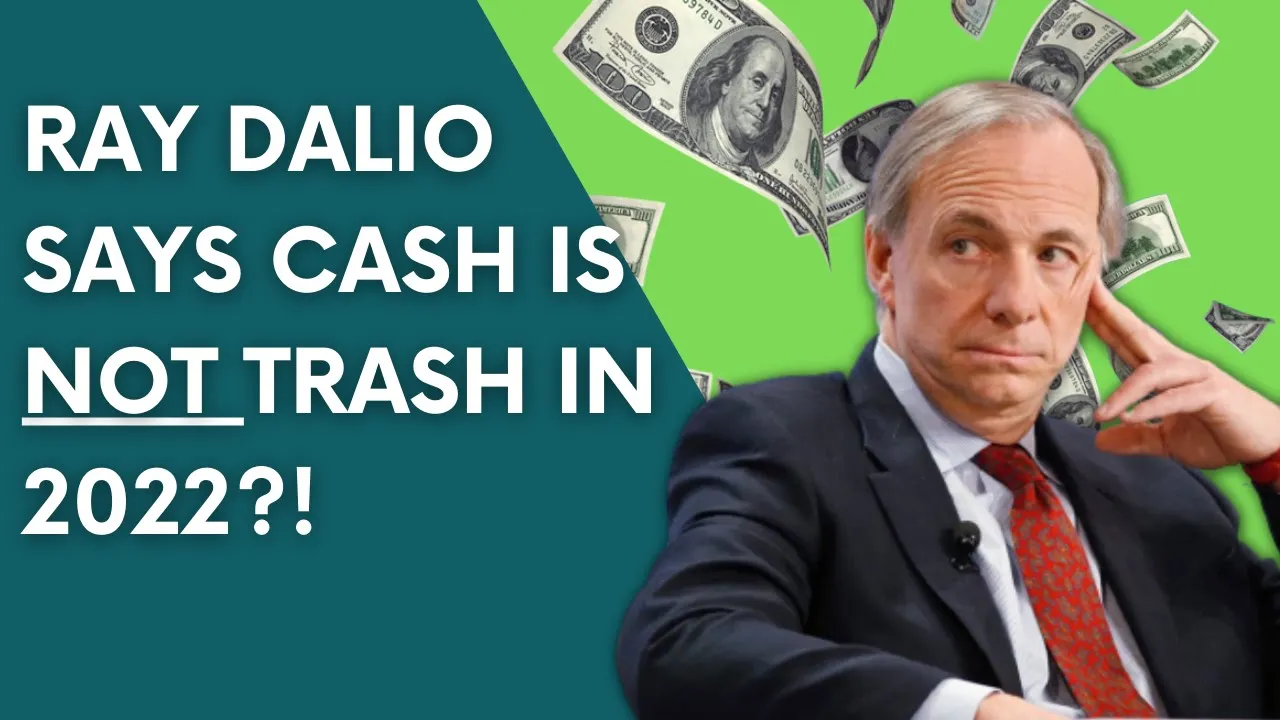
Billionaire Ray Dalio now says Cash is NOT Trash in 2022?
Is cash indeed not trash? Is this relevant for your retirement plan? Back in 2021 during the COVID pandemic, billionaire Ray Dalio told the masses that cash is trash. Seemingly a year later he has completely reversed this statement and now states the opposite. Billionaire Opinions: With short-term interest rates now approaching 4.5% on 2-year Treasuries, billionaire hedge fund manager Ray Dalio of Bridgewater Associates has recently declared cash is NOT trash. Mr. Dalio started using the catchy phrase, “Cash is trash,” quite a few years ago. We did a few podcasts in 2021 discussing this. He became notorious for it when he pronounced “cash is trash” from on high, both literally and figuratively, on January 21st, 2020, amongst the business and political elites in the mountains in Davos, Switzerland, at the World Economic Forum, also known as WEF. And then Covid hit, and the S&P500 dropped over -30% in just four weeks. Then again, on Xmas day in 2021, Mr. Dalio put out a YouTube video, once again, declaring “Cash is trash,” a mere week before the S&P500 peaked at all-time highs and then fell over 25% in a little over 9 months. Then finally, on October 3rd, about six weeks ago, with the S&P 500 down almost -25% in 9 months and closing at near 2-year lows, but short-term rates approaching 4%, Mr. Dalio came out and declared “cash is NOT trash” anymore. I am Chris Perras, Chief Investment Officer at Oak Harvest Financial Group, and before I address the notion that “cash is trash or is not trash” for investors other than billionaires or 100-year time horizon endowments and pension funds that Bridgewater markets their funds to, make sure you click on the subscribe button as well as the notification bell, so our team can notify you when we upload new content. First off, I have never argued with the basic academic premise behind Mr. Dalio’s original proclamation calling “cash trash.” His basic rationale had been that a mushrooming money supply, as well as government…
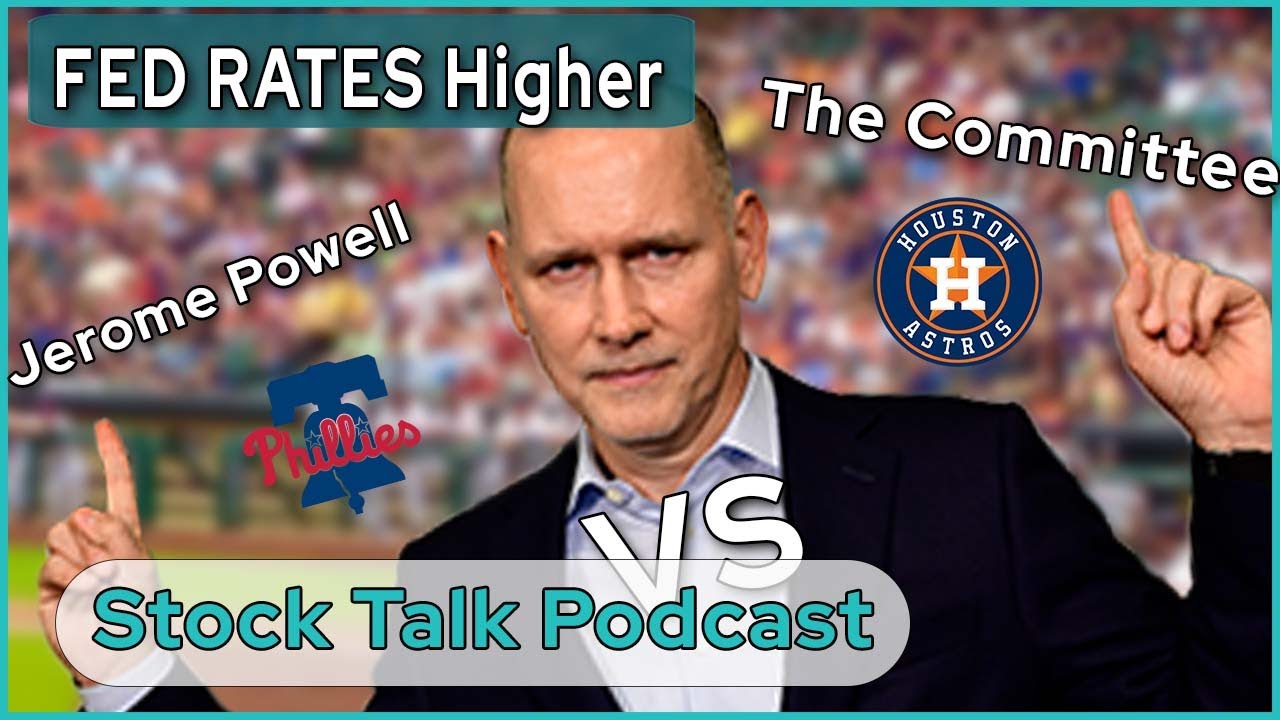
Jerome Powell vs The Committee – Raising Interest Rates while You’re in Retirement
The Financial Chess Game: In a much-anticipated move, the Federal Reserve, the central bank of the US, raised short-term borrowing rates to a target range of 3.75-4%. While this was expected, interest rate moves are always news for your money. I am Chris Perras with Oak Harvest Financial Group in Houston, Texas, and welcome to our weekly stock talk podcast, keeping you connected to your money. Before moving on to discuss last week’s Fed meeting, its rate increase, and trying to, read between the lines, please make sure you hit that subscribe button and tap the notification bell so that you’ll be notified when we release our latest content. The Fed moves are almost always news for you, your family, and your money. As it has been all year, markets were once again whipsawed on the day of the Fed’s interest rate increase. Why? Because the release comes in two parts. There’s the written committee statement and then about 15 minutes later there are the Chairmen’s comments and questions and answers. The markets initially reacted positively rallying to 3900 on the S&P 500 on the committee statement which read more dovish. The dovish change was the Fed discussed factors that would influence policy going forward, saying that the committee would “take into account the cumulative tightening of monetary policy, the lags with which monetary policy affects economic activity and inflation, and economic and financial developments.” Code for, we will be forward-looking and anticipatory. We know a slowdown is coming in the economy. This was taken as bullish by markets. The Fed saying that a slowdown in the pace of future hikes is coming. They alluded to future rate hikes being smaller than the last four consecutive 0.75 percentage point rate increases, And then Jerome Powell started talking, started answering questions, and the S&P500 dropped to 3760 in a straight line over the last 60 minutes of trading as computers took over trading with no other markets in the world open. What did he say that markets didn’t like? Well, while…
Value Stock or Value Trap…Trick or Treat | Stock Talk Podcast
The Investor Advice: We’ve all done it as investors, even the great Warren Buffett. The “It” is buying a stock or holding on to a stock based on valuation, holding on to it because it’s down -30 to 50%, or thinking it’s “cheap” only to be massively disappointed by its stock returns going forward. The poster child for this kind of value trap over the last four quarters has been the stock of Facebook, now known as Meta. The culprit behind META’s stock plunge in the last four quarters is a peaking and rollover in its revenue growth, post-Covid boost; at the same time, Mark Zuckerberg has taken the position of spending $19 billion on capex in 2021, $32.5 billion in 2022, and even more $34 to $39 billion in 2023 on building out his vision for the Metaverse. This is with zero cash investment return on the horizon and most people seeing its tipping point to consumer adoption outside of gaming 5-10 years away. Stocks don’t like declining or plunging free cash flow like this. Much like the old baseball adage, “hit em where they ain’t,” the best value stocks, or groups, like max negative sentiment; they like troughing, not declining revenue growth, trough margins, and peak capital spending, not a continued ramp of spending into uncertain returns. The subject of this week’s podcast? Is that a value stock or group? Or a value trap?When to be a contrarian and not be too early. I am Chris Perras with Oak Harvest Financial, Group in Houston, Texas and welcome to our, weekly stock talk podcast, keeping you connected, to your money.Before we get into this week’s topic, Contrarian Investing, value stock, or value trap? Please take a moment to click on the subscribe button and click on the notification bell so you will be alerted when our team uploads our latest content. Being Early: Value investors like to be early. But if you are too early, you can be very wrong on both an absolute basis and a relative basis….
Way Back to 1974 Is History Repeating Itself | Stock Talk Podcast
Historic Quarters: 2022 is nearing a historically bad first three quarters for investors in stocks and bonds globally in many ways. The main culprit is our Federal Reserve vowing to bust inflation now by implementing the most aggressive monetary tightening the world has seen since 1994. With most stock indexes down -20% or more, and many bond investors sporting similar-sized losses, the lingering question many investors are asking is “Are we there yet?” Are the “lows in for the year?” It’s the question asked on a daily basis, with most on T.V. now siding on the side of no. We, like others, don’t know for sure. The key signs we are looking for remain a peak in real interest rates and a peak in the U.S. dollar. However, frequent watchers know that we like to look at previous time periods for clues to the future, as much of what happens in the financial markets is based on behavioral finance. Much of what happens does repeat and rhyme time and time again. We’ve discussed 2022 being a mid-term election year. We’ve compared it to a number of other mid-term cycles when interest rates were increasing, the Fed was tightening monetary policies, there was geopolitical volatility around the world, and we had bear market declines. I am Chris Perras with Oak Harvest Financial Group in Houston, Texas and welcome to our weekly stock talk podcast, keeping you connected to your money. Before we get into this week’s topic, “2022, A 1974 replay? A Long, Long, Time ago”, please take a moment to click on the subscribe button and click on the notification bell so you will be alerted when our team uploads our latest content. 2022 has gone well beyond our correction call we set out in the 4th quarter of 2021. We now sit in the first legitimate bear market investors have experienced in both percentage decline and time in years. It has not been fun for anyone unless you are a hedge fund using a managed futures strategy that almost…
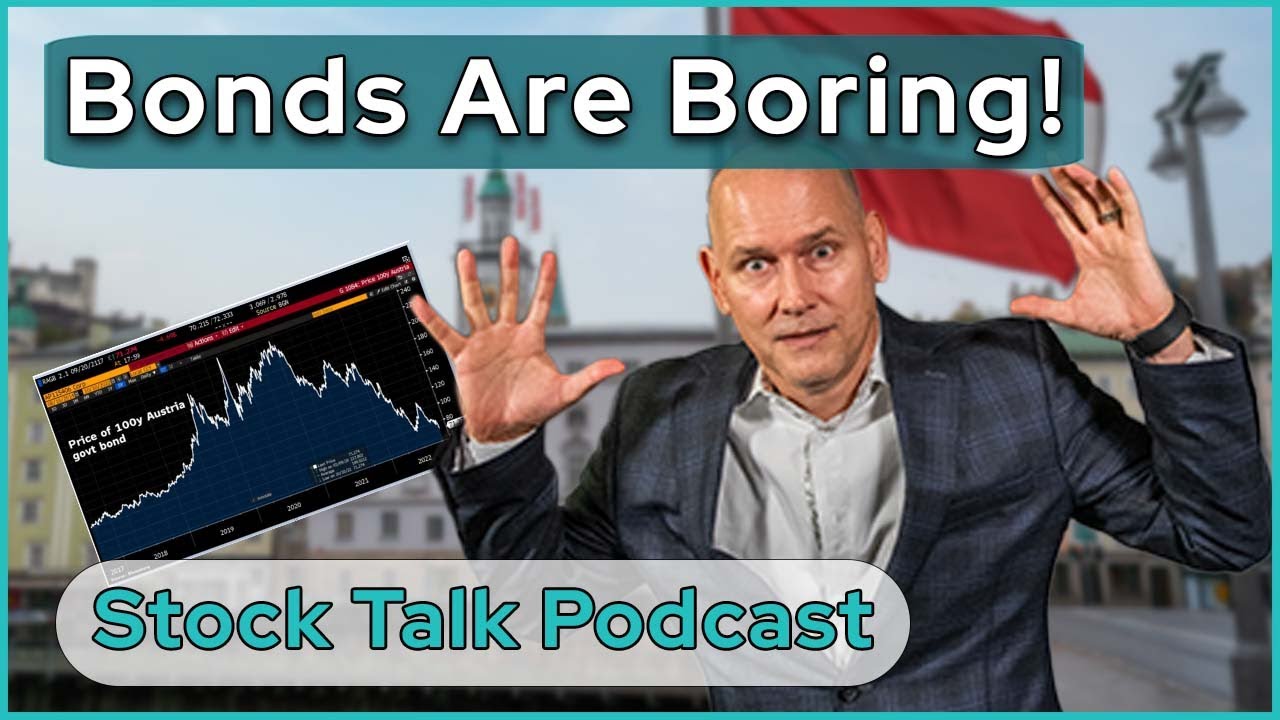
Bond Portfolios Down Year to Date | Stock Talk Podcast
Unprecedented Moves: Do you have losses in your bond holdings? Bond markets have declined in unison with stocks year to date primarily for one reason. The Federal Reserve has moved with historically large and fast interest rate hikes. They’ve done it at one of the fastest paces in 100 years. This after being overly easy from a monetary standpoint for years. I’ll say it. The Fed’s moves in 2022 have been unprecedented for the last 50 years. Only Alan Greenspan in 1994 comes close when he doubled rates in 12 months. See it for yourself: Given Septembers CPI, these increases should continue in November and December. Ugh. So far, 2022 has been almost as bad for bond investors as for stockholders. Many in the financial press like to focus their stories on the “sexier” assets like equities or private technology companies instead of talking about bonds and fixed income. These stories get more clicks and views than talking about boring bonds most of the time. Hell, up until this year, most bond managers on TV would spend more time talking about bitcoin, gold, or stocks than their own bond portfolios. 2022 has been a trainwreck for most bond portfolios. I am Chris Perras with Oak Harvest Financial Group in Houston, Texas and welcome to our weekly stock talk podcast, keeping you connected to your money. Before we get into this week’s topic, “Why are my bond portfolios down so much this year?” Please take a moment to click on the subscribe button and click on the notification bell so you will be alerted when our team uploads our latest content. We’ve talked about bonds and fixed income a couple of times over the last few years. Only 18 months ago, many investors we spoke with were worried that their fixed-income portfolios were yielding so little. We saw many prospective clients searching for higher yields in their portfolios, wanting to buy more risky credits or lengthening their maturities in an attempt to gain another quarter percent to 1% in yield. Once…
What Could Go Right? | Stock Talk Podcast
Busting Inflation: 2022 has been a bad nine months for investors in stocks and bonds globally as our Federal Reserve has vowed to bust inflation now. Never mind that our Fed fueled a large part of the inflation currently in the system by downplaying inflation in 2021 and the job market ahead of their inflation goals. Even Fed Governor Christopher Waller admitted last week that they are looking at lagging data, particularly lagging housing market data. Even though they are watching the same data, they are determined to right their wrong in 2021. They have reversed course placing inflation taming over jobs. Jerome Powell and his team are now playing the game of we “won’t make an Arthur Burns, early 1970’s, inflation mistake.” Our Fed is taking the current inflation problem deathly seriously with these 75bps rate hikes, trying to make sure inflation doesn’t become a fixture in our future economy. One where consumers and businesses expect prices to rise in the future. They are pushing so hard that things are starting to break around esoteric areas of the financial markets. But Viewers, the S&P500 peaked on an absolute basis almost exactly at the year-end of 2021. I know this puts most long-term investors in a foul mood, including myself, now with the markets having a year to date posted its first bear market decline in years. Ex a few hedge funds I know, most investors, retail or otherwise are feeling depressed nowadays having emotionally “marked to market” their net worths or companies AUM much higher on December 31st, 2021. However, many sectors, groups, and single stocks had been diverging from the S&P500 for months, if not quarters, all the way back to the late first quarter of 2021 when the yield curve peaked. While our team had expected our first market correction since the Covid bottom, we did not expect our first broad bear market in years. The S&P500 has roundtripped two years of gains through the end of 3rd quarter, which while common during Fed rate increases,…
Interest Rate Cycles – “The WayBack Machine: 1994”
Global Dynamics: Global risk asset markets continue to move wildly and trend lower as investors wrestle with the speed at which global Central Banks are raising interest rates and more importantly with the speed at which our Federal Reserve is shocking markets with its multiple 75 basis point rate increases as economic growth grinds to a crawl globally. Last week, the Bank of England, in order to both defend the British pound and stave off a pension liquidity crisis, made an emergency intervention announcing it would buy as much government debt as needed to restore stability to currency and bond markets. In layman’s terms, UK’s central bank pivoted back to QE, quantitative easing. So that’s three central banks back on the QE trail again, the UK, Japan, and Korea. 2022 has been no fun for investors outside of a few macro hedge funds. Still, we have seen a few of these moves by Central bankers affecting currencies and financial markets like this in past cycles. “When,” you ask. Stay tuned. I am Chris Perras with Oak Harvest Financial Group in Houston, Texas, and welcome to our weekly stock talk podcast, keeping you connected to your money. Before we get into this week’s topic, “The way back machine, 1994, Federal Reserve interest rate cycles and financial markets,” please take a moment to click on the subscribe button and click on the notification bell so you will be alerted when our team uploads our latest content. While Powell has repeatedly said that the Fed and its committee are “data dependent,” the government data they review continues to show elevated and stubborn inflation. The Fed tends to rely on data collected by the Bureau of Labor and Statistics, which has historically lagged what’s going on in the real-time economy by months and quarters, both on the way up and on the way down. Powell’s words out of the September FOMC were more hawkish than markets were expecting, much as Alan Greenspan’s words were in 1994. The FOMC’s talk suggests another 75bps and 50…
The Fed’s “Real”ly Hurting Risk Assets
Sharp Movements: Stock markets moved sharply higher into mid-August, hoping for a shift towards an easier Fed in the fourth quarter and in 2023. Real interest rates were falling into Chairmen Powell’s speech in late August. Jerome Powell’s 8-minute speech at Jackson Hole on Friday, August 26th, threw cold water on that. The Fed’s September 22nd FOMC release and the question-and-answer session that followed with Chairmen Powell put further upward pressure on real interest rates and downward pressure on all risk assets. There was only one winner on the day. The U.S. dollar hit a new decade high. For now, the dollar remains the world’s currency of safety. Risk assets don’t like this at this stage of the business cycle. With every market ex, the U.S. closed at the time of the FOMC release, the final 2 hours of trading was one of the bigger whipsaw sessions of the year, with stocks rallying over 3900 but closing on their lows and the S&P500 falling back below 3800. I am Chris Perras with Oak Harvest Financial in Houston and welcome to our weekly stock talk podcast, keeping you connected to your money. Before we get into this week’s topic, “The Fed playing catchup to inflation has “real” ly hurt risk assets” all year. Please take a moment to click on the subscribe button and click on the notification bell so you will be alerted when our team uploads our latest content. (For YouTube Viewers) While Powell has repeatedly said that the Fed and its committee is, “data dependent,” the government data they review continues to show elevated and stubborn inflation. The Fed tends to rely on data collected by the Bureau of Labor and Statistics, which has historically lagged what’s going on in the real-time economy by months and quarters, both on the way up and on the way down. The release of August CPI data on September 13th, exceeded analysts’ expectations and set off a cascade down in stocks and up in Fed rate expectations. Powell’s words out of the…