

Weekend Update, August 10th, 2026
Fast Money: New All-Time Highs
Key Takeaways Last Week
Top Moves
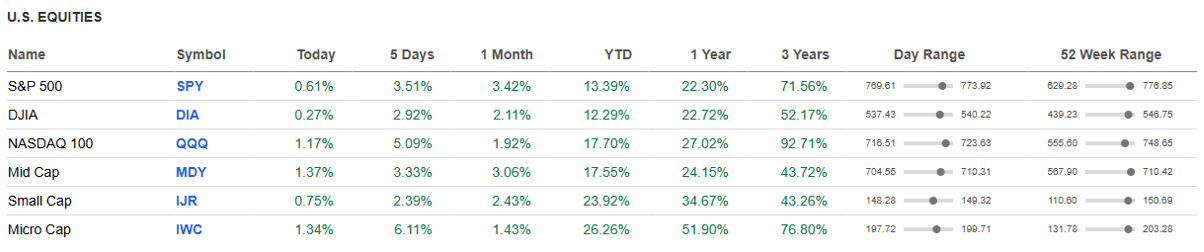
- U.S. stocks rallied to records. The S&P 500 gained 3.6%, Nasdaq 5.2%, Dow 3.0%, and Russell 2000 3.5%. Technology led, but the advance was broader than purely mega cap rally.
- Year to date, the Russell 2000 remains the leader at +22.3%, followed by the Nasdaq at +14.8%, the S&P 500 at +13.3%, and the Dow at +12.4%.
- Treasury yields fell after a major payroll disappointment. U.S. employers cut 23,000 jobs in July, while May and June payrolls were revised down by a combined 103,000. Investors judged the weakness could delay further Fed tightening.
- Oil dropped sharply early in the week. Brent fell –7% Monday after the U.S. paused new strikes against Iran. Crude recovered somewhat later, leaving oil diplomacy a major driver of stocks, rates, and inflation expectations.
- A combination of easing oil pressure, lower yields after payrolls, and positioning, caused the rally.
Key Themes
- “Bad economic news is good news for stocks” returned. Weak hiring reduced the immediate case for higher rates, helping both stocks and bonds Friday. Payroll contraction and large downward revisions also suggest that slower growth may be emerging. https://www.zerohedge.com/markets/july-jobs-shock-us-lost-23k-workers-below-lowest-estimate-unemp-rate-drops-41
- Earnings restored confidence in the AI and investment cycle. Palantir jumped after reporting 93% revenue growth and raising guidance, while Caterpillar beat expectations and cited data-center-related turbine demand. Coming into the week, S&P 500 earnings were tracking toward nearly 50% year-over-year growth, including substantial one-time investment gains.
- Oil remains influx between geopolitics and Fed policy. Lower crude supported the equity rally and eased inflation fears. Iran said Sunday that agreement on maritime routes would not automatically reopen Hormuz, while Houthi attacks targeted Saudi energy and shipping facilities.
U.S. Stock Performance – Index and Sector Moves
Financial markets improved during the week ending 8/7/26.
- S&P 500: 7,757.64 — +3.6% WTD / +13.3% YTD
- Dow Jones Industrial Average: 54,036.93 — +3.0% WTD / +12.4% YTD
- Nasdaq Composite: 26,690.62 — +5.2% WTD / +14.8% YTD
- Russell 2000: 3,034.49 — +3.5% WTD / +22.3% YTD
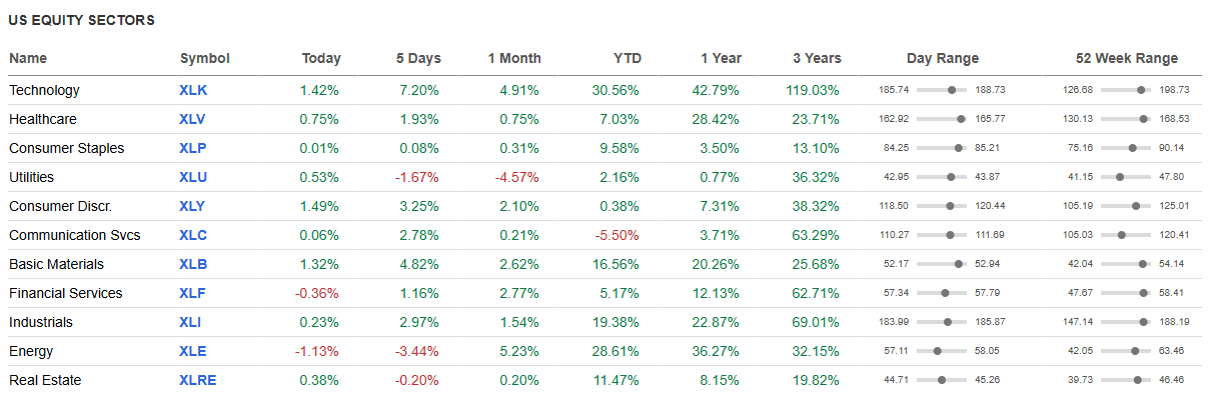
Sector and factor leadership broadened beyond mega-cap technology. Software, AI infrastructure, optical networking, semiconductors, industrials, aerospace, biotechnology, and metals showed strength.
Energy lagged the broader rally as oil prices declined significantly during the week. The Nasdaq reclaimed its short- and intermediate-term moving averages and posted its strongest week since April, while new highs in the S&P 500 reinforced the improving technical backdrop.
Source: Seeking Alpha
Source: Seeking Alpha
S&P 500 Weekly Leaders and Laggards Ranked
Top Performers (WTD)
- Coherent Corp. (COHR): +44.22%, led the S&P 500 as investors aggressively returned to optical networking and photonics companies tied to AI data-center connectivity.
- Palantir Technologies (PLTR): +39.78%, surged after reporting Q2 revenue, up 93% year over year. U.S. commercial revenue increased approximately 149
- Zebra Technologies (ZBRA): +28.14%, rallied following stronger-than-expected Q2 results.
- Gartner (IT): +22.90%, rose sharply following its Q2 report. Investors responded positively to resilient research demand and indications that corporate technology decision-making.
- Newmont Corporation (NEM): +20.56%, benefited from strength in gold and precious-metal equities as the weak July employment report pushed Treasury yields lower.
Bottom Performers (WTD)
- The Trade Desk (TTD): -23.50%, fell after Q2 revenue was disappointed and issued significantly weaker guidance. Slower advertising growth, execution issues, and competitive pressure intensified concerns.
- DaVita (DVA): -23.46%, DaVita sold off sharply during the week as price per treatment declined.
- Western Digital (WDC): -20.29%, declined sharply following its fiscal-quarter report. The stock remained under pressure as investors reduced exposure to crowded memory and storage names.
- AppLovin (APP): -12.40%, fell after results failed to clear the market’s extremely high expectations.
- NRG Energy (NRG): -12.03%, declined following its quarterly earnings release and faced pressure as energy prices weakened during the week.
Breadth & Participation
Market breadth improved substantially.
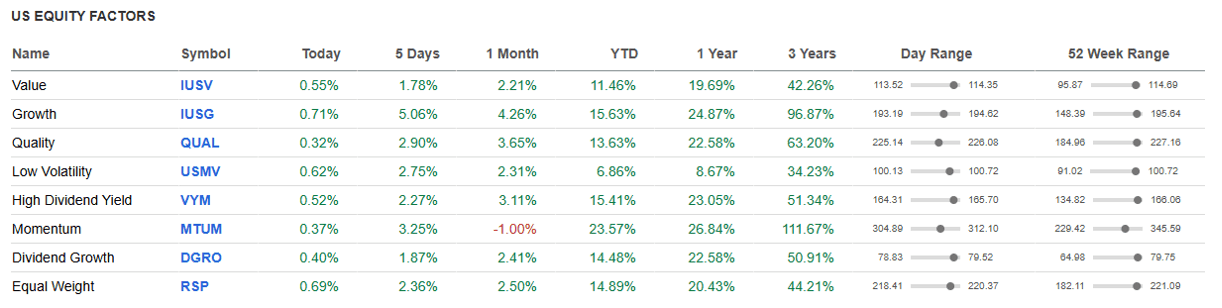
The S&P 500 reached fresh highs, while the Nasdaq recorded its best weekly performance since April and reclaimed both its 21-day and 50-day moving averages.
Leadership broadened beyond mega-cap AI stocks into:
Source: Seeking Alpha
International/Global
Geopolitics continued to revolve around the U.S.–Iran conflict and the Strait of Hormuz.
Negotiations involving Iran and Oman moved closer to a potential temporary shipping framework. Commercial traffic through Hormuz improved to approximately 84 vessel transits during the week, versus about 45 the previous week, although traffic remained far below the more than 700 weekly transits typical before the crisis. A final agreement had not been signed by Friday. Iran continued seeking broader concessions, including sanctions relief and changes to U.S. military and economic pressure, while the U.S. emphasized restoration of commercial shipping.

Source: Seeking Alpha
Volatility & Risk Sentiment
Risk sentiment improved meaningfully as equities reached records and Treasury yields fell following the employment report.
VIX: approximately 15.
MOVE: 72
Bonds, Credit & Interest Rates
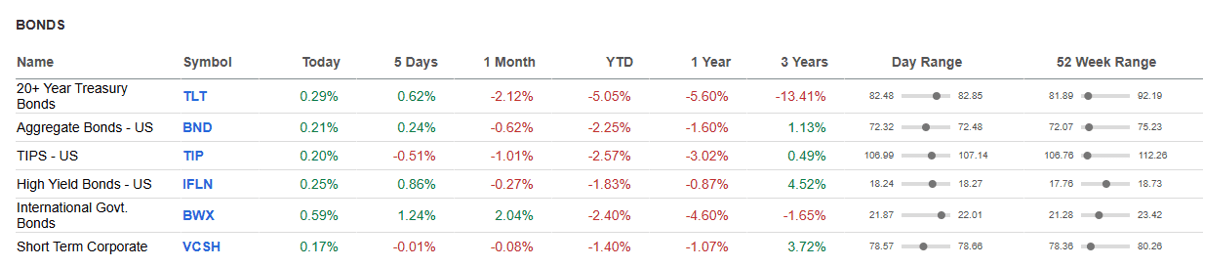
Treasury yields declined during the week:
- 2-year Treasury: approximately 4.20%
- 10-year Treasury: approximately 4.66%
- 30-year Treasury: approximately 5.21%
The 2-year yield fell approximately 9 basis points during the week, while the 10-year declined by a similar amount. The weak employment report reduced expectations for another near-term Fed rate increase. The market-implied probability of a September hike fell from approximately 55% before the jobs report to roughly 42%–43% afterward.
Source: Seeking Alpha
Economic Data, Monetary Policy & Earnings
The July employment report was the week’s most important macro event. Nonfarm payrolls unexpectedly declined by 23,000. The unemployment rate edged down to 4.1%, but labor-force participation weakened. May and June payroll estimates were revised lower by a combined 103,000 jobs, reinforcing the view that labor-market momentum had deteriorated more than previously believed. Private-sector payrolls still increased modestly, while government and retail employment were among the weaker areas. Average hourly earnings growth slowed to approximately 3.2% year over year.
The report leaves the Federal Reserve in a difficult position. Inflation remains above target, partly because of energy and geopolitical disruptions, but employment growth has now weakened enough to make additional tightening more difficult to justify.
Second-quarter earnings remained broadly supportive. Approximately 86%–90% of reporting S&P 500 companies were beating earnings expectations, and the index remained on track for another quarter of double-digit earnings growth.
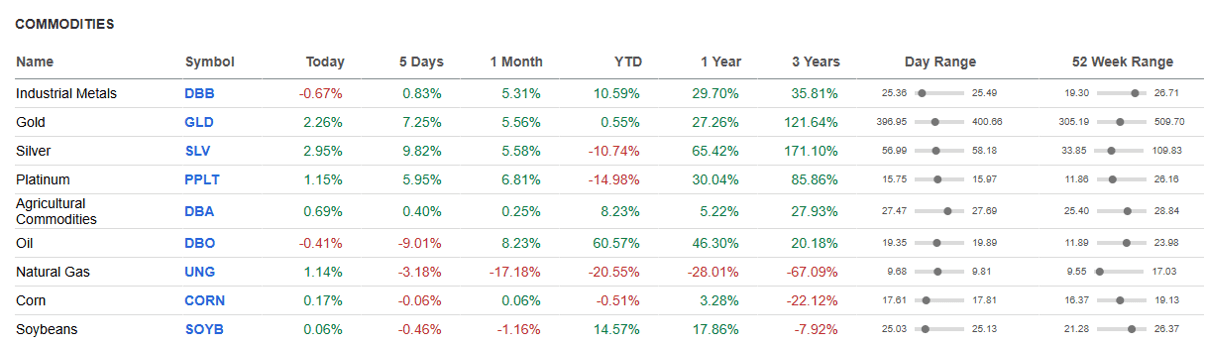
Commodities, Currencies & Macro Assets
WTI crude: approximately $78.18/bbl, weekly change: approximately -7.7%
Gold: $4,400, up 7% WTW.
Oil declined on the week despite renewed fighting because temporary diplomatic pauses and expectations for supply restoration reduced part of the immediate risk premium.
Source: Seeking Alpha
What Matters This Week
- July CPI and whether inflation continues easing despite earlier energy disruptions
- July PPI and pipeline inflation
- Retail sales and the health of consumer spending
- Cisco earnings and AI-networking orders
- Applied Materials earnings and semiconductor-equipment demand
- Coherent earnings and AI optical-networking growth
- Data-center infrastructure earnings from companies including CoreWeave and Nebius
- U.S.–Iran/Oman negotiations and Strait of Hormuz shipping volumes
Bottom Line
Markets finished their strongest week since April as weak employment data, lower Treasury yields, falling oil, and strong corporate earnings created a favorable backdrop for equities. The S&P 500 reached another record, the Nasdaq surged more than 5%, and small caps participated, suggesting the rally was broader than a simple mega-cap technology rebound.
The labor report changed the policy discussion. The question is no longer only whether inflation will force the Fed to tighten further. Investors must now consider whether employment is weakening enough to prevent the Fed from raising rates despite inflation remaining above target.
Earnings dispersion remains the defining feature of the market. Palantir, Zebra, Gartner, and Newmont delivered or benefited from powerful fundamental catalysts. The Trade Desk, DaVita, Western Digital, AppLovin, and NRG demonstrated how quickly markets can punish disappointing guidance.
Stock Talk
Past performance is no guarantee of future results. Indexes are unmanaged and one cannot invest directly in an index. They do not reflect any fees, expenses or sales charges. The preceding discussion is for informational purposes only. Investing involves risk and no reference to any security listed above should be considered a buy or sell recommendation. Advisory services are provided through Oak Harvest Investment Services, LLC, a registered investment adviser.