

Weekend Update, July 27th, 2026
The Big Churn
Key Takeaways Last Week
U.S. equities fell for a second straight week, with the pressure concentrated in growth/AI leadership. The S&P 500 lost -0.6%, the Dow fell -0.4%, the Nasdaq dropped -2.1%, and the Russell 2000 declined -1.1%. Year to date, the Russell 2000 remains the strongest major index at approximately +18.1%, followed by the S&P 500 at +8.3%, the Dow at +8.1%, and the Nasdaq at +7.5%.
Oil was the biggest cross-asset mover causing Treasury yields to rise during the week as investors priced more energy-driven inflation risk. Brent crude briefly traded above $100 on Middle East supply fears, then fell nearly 4% on Friday to settle around $96.78 as diplomacy headlines cooled the spike.
- Alphabet and Tesla sold off after their earnings reports intensified concerns about AI capital spending.
- Oil rose sharply during the week as U.S.–Iran fighting and Red Sea attacks renewed concerns about energy.
- Treasury yields reached their highest levels since early 2025 before easing Friday.
- Industrial, defense, energy, data-center real estate, and selected semiconductor names outperformed.
- 2Q26 earnings remained strong, with stocks dependent on guidance, free cash flow, and capital-spending.
Key Themes
The market’s main question is shifting from “Is AI demand strong?” to “will AI spending continue to bleed Mag7 cash flow”. Alphabet’s strong results were overshadowed by higher AI infrastructure spending plans, while Tesla sold off after a profit miss and dramatically higher capex spend for the4 next few years.
War fears mattered because it flowed directly into inflation and rates. Oil-market stress tied to Middle East conflict, Strait of Hormuz risk, and Red Sea disruptions pushed investors to reassess whether the Fed may need to even hike later this year.
The week’s data calendar was light, but jobless claims surprised lower and business-activity data were better than expected, reinforcing the “resilient growth, sticky inflation risk” setup. Tariffs returned as a market issue.
U.S. Stock Performance – Index and Sector Moves
Financial markets weakened during the week ending 7/24/26.
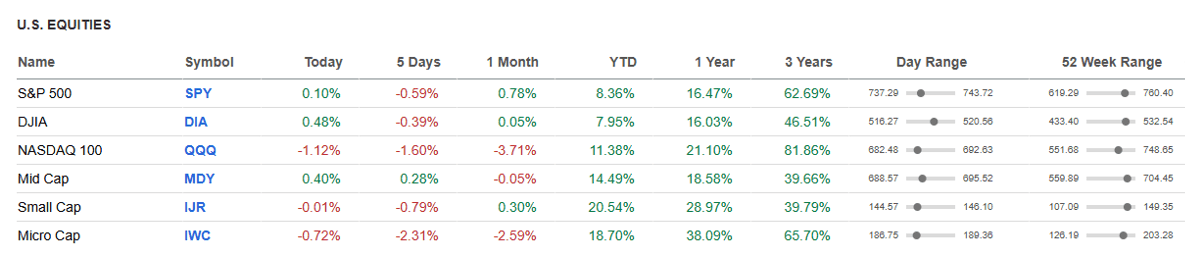
The S&P 500 closed at 7,411, the Dow Jones Industrial Average at 51,9475, the Nasdaq Composite at 24,975, and the Russell 2000 near 2,930. Sector performance was sharply divided:
- Utilities: +2.33%
- Industrials: +1.60%
- Real Estate: +1.39%
- Materials: +1.11%
- Health Care: +0.92%
- Information Technology: +0.17%
- Financials: -0.11%
- Consumer Staples: -1.39%
- Communication Services: -5.90%
- Consumer Discretionary: -6.38%
Source: Seeking Alpha
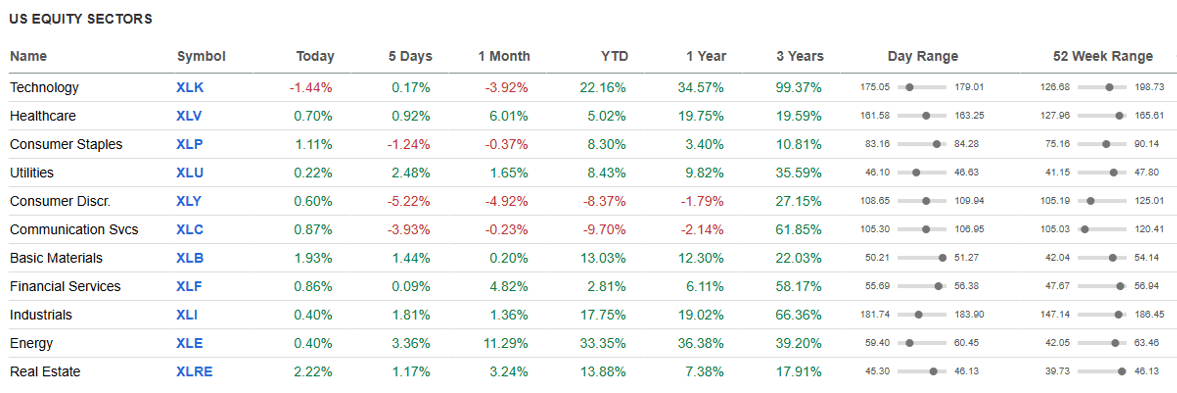
Consumer discretionary and communication services were hurt by weakness in Tesla, Alphabet, Meta, Amazon, and other high-capital-spending technology companies. Industrials, utilities, real estate, and materials benefited from earnings strength and rotation away from crowded mega-cap exposure.
Source: Seeking Alpha
S&P 500 Weekly Leaders and Laggards Ranked
Top Performers (WTD):
- Westinghouse Air Brake Technologies / Wabtec (WAB): +15.42%
Wabtec reported EPS above consensus, while revenue increased approximately 17.5%. Strong demand across freight operations. - Lockheed Martin (LMT): +14.51%
Lockheed reported better sales and earnings and disclosed a record backlog near $230 billion. Defense demand and Middle East tensions. - Digital Realty Trust (DLR): +14.49%
Digital Realty reported record funds from operations, a 29% year-over-year revenue increase, a record leasing backlog. - SLB (SLB): +11.56%
SLB beat expectations, supported by offshore activity, a rebound in North American operations, and expanding data-center demand. - Dell Technologies (DELL): +10.39%
Dell benefited from continued enthusiasm around AI-server infrastructure, new orders, enterprise hardware demand.
Bottom Performers (WTD):
- Tesla (TSLA): -17.81%
Tesla reported an earnings decline and its first cash burn in two years as spending increased. Management signaled that robotics, AI, manufacturing, and other investment requirements could remain elevated, increasing concern about margins and free cash flow. - Rollins (ROL): -14.52%
Rollins missed expectations. Slower residential pest-control demand and weaker organic growth. - C.H. Robinson Worldwide (CHRW): -10.55%
C.H. Robinson declined amid concerns that AI-enabled logistics tools could disrupt traditional freight-brokerage economics. - CrowdStrike (CRWD): -9.75%
Investors took profits from cybersecurity winners and reduced exposure to highly valued recurring-revenue software. - Palo Alto Networks (PANW): -9.73%
Cybersecurity momentum reversed and investors reduced exposure to richly valued software and AI beneficiaries.
Breadth & Participation
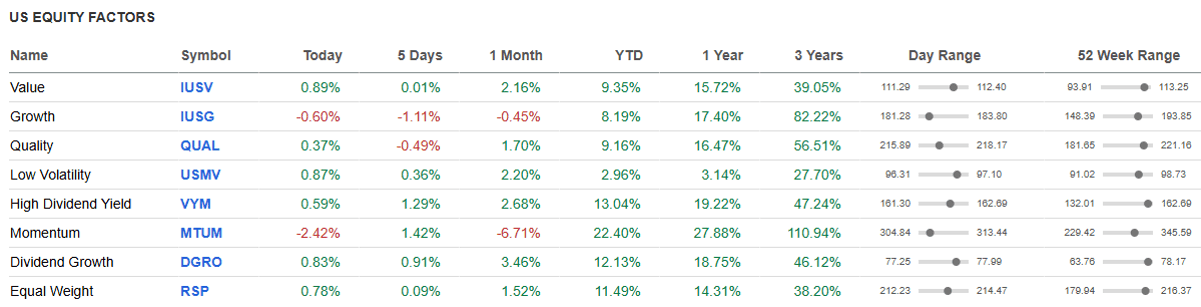
Breadth was stronger than the Nasdaq’s decline suggested. Utilities, industrials, real estate, materials, and health care all gained, while the losses were concentrated in communication services, consumer discretionary, and selected mega-cap technology names.
The S&P 500 and Nasdaq fell below their weekly flatlines after Alphabet and Tesla reported, illustrating how heavily cap-weighted indexes remain influenced by a small group of technology companies.
Source: Seeking Alpha
International/Global
European equities finished modestly higher, while Asian performance was mixed as technology weakness offset firmer economic data. Emerging markets gained approximately +0.09%, and developed international equities gained approximately +0.06% for the week.

Source: Seeking Alpha
Volatility & Risk Sentiment
Risk sentiment deteriorated as the AI selloff deepened.
VIX: approximately 18.77, up on week.
Bonds, Credit & Interest Rates
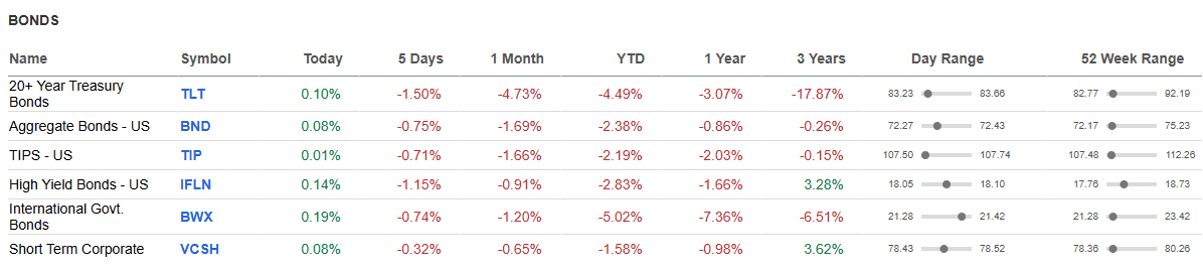
Treasury yields rose sharply during the week:
- 2-year Treasury: 4.33%
- 10-year Treasury: 4.69%
- 30-year Treasury: 5.16%
- 2-year/10-year spread: approximately +36 basis points
Higher oil prices, resilient economic activity, Treasury supply, and the possibility of additional Fed tightening pressured bonds. The estimated probability of a rate increase at the July meeting rose to approximately 38%, up from roughly 13% one week earlier.
Source: Seeking Alpha
Economic Data, Monetary Policy & Earnings
Economic data remained relatively firm. Business-activity surveys and new-home sales were stronger than expected, reinforcing the view that the economy continues to expand despite high borrowing costs.
Second-quarter earnings remained strong. FactSet reported that 27% of S&P 500 companies had released results, with 86% exceeding EPS estimates and 80% beating revenue estimates. Blended earnings growth reached 37.9%, although Alphabet’s unusually large investment-related gain materially inflated that figure. Excluding Alphabet, estimated growth was 25.9%.
Alphabet’s operating results were strong, but investors focused on capital expenditure exceeding $200 billion and negative free cash flow. Tesla’s cash burn and rising investment requirements reinforced concern that AI and robotics spending may take longer to produce acceptable shareholder returns
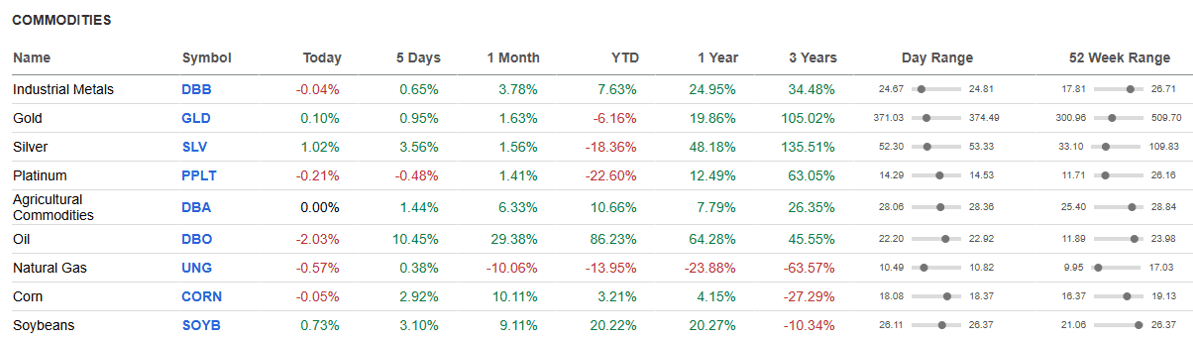
Commodities, Currencies & Macro Assets
WTI crude rallied much higher on renewed ME tensions and escalated fighting.
Gold: $4,050
Dollar Index: $100
Bitcoin: approximately $64,400
Source: Seeking Alpha
What Matters This Week
- Federal Reserve rate decision and Kevin Warsh’s press conference
- Q2 GDP, core PCE inflation, and Employment Cost Index
- Apple, Microsoft, Meta, and Amazon earnings
- AI capital expenditures and free-cash-flow conversion
- U.S.–Iran ceasefire discussions and Red Sea shipping
- Oil prices and their effect on inflation expectations
- Treasury auctions and the 10-year yield
- Whether technology selling broadens into other sectors
Bottom Line
Markets declined for a second week as rising oil, higher Treasury yields, renewed tariffs, and disappointing reactions to Alphabet and Tesla earnings pressured large-cap growth. The weakness was not uniform: defense, rail equipment, data-center real estate, oil services, utilities, industrials, and materials held up well.
The principal market debate has shifted from whether AI demand is real to whether the enormous capital required to serve that demand can generate acceptable free cash flow and shareholder returns. Strong aggregate earnings remain supportive, but the market is applying a higher standard to spending discipline, guidance, margins, and cash-flow conversion.
Stock Talk
SpaceX IPO: What we learned, The Real Story is Investor Expectations
Past performance is no guarantee of future results. Indexes are unmanaged and one cannot invest directly in an index. They do not reflect any fees, expenses or sales charges. The preceding discussion is for informational purposes only. Investing involves risk and no reference to any security listed above should be considered a buy or sell recommendation. Advisory services are provided through Oak Harvest Investment Services, LLC, a registered investment adviser.